Friday, November 27, 2026

Nigeria Looks to Local Processing for a Bigger Share of the Global Shea Market

Video: CGTN Africa / YouTube

Nigeria is looking to process more of its shea harvest at home and capture a bigger share of the global market. In a new video report, CGTN Africa puts that global market opportunity at $6.5 billion.

A Nigerian government assessment reported by Punch in July estimated that Nigeria produced nearly 40% of the world’s shea nuts but captured less than 1% of the industry’s value. The assessment pointed to a gap between what the country grows and what it earns from processing and manufacturing.

The $6.5 billion figure describes the global market. The question for Nigeria is how much more of that value it can keep by turning raw nuts into products such as shea butter before they leave the country.

Reporting sources — CGTN Africa · Punch on the government’s shea value-chain assessment

By NaijaFeed

Rising Bread Prices Squeeze Nigerian Households and Bakeries

Video: CGTN Africa / YouTube

Rising bread prices are putting pressure on Nigerian households and the bakeries that supply them. A new CGTN Africa report looks at both sides of the price increase, from shoppers facing higher prices to businesses dealing with rising production costs.

Earlier this month, bakery owners told The Guardian that rising costs and weaker consumer purchasing power were making it harder to keep their businesses running. Together, the reports show the bind bakers face when their costs rise while customers have less money to spend.

Reporting sources — CGTN Africa · The Guardian Nigeria

By NaijaFeed

Ogun Calls for Closer Coordination Between First Responders and Hospitals

Ogun State’s health commissioner has called for closer coordination between emergency services, hospitals and the people often first on the scene of a medical emergency.

Commissioner Tomi Coker made the call Friday at a meeting of the Ogun State Emergency Medical Treatment Committee. She said road traffic officers and commercial drivers are among those who can influence what happens before a patient reaches a hospital.

Representatives from transport unions, traffic agencies and health bodies attended the meeting. The state’s emphasis was on improving how responders work together from the scene to the health facility.

Reporting source — Punch

By NaijaFeed

Nigeria’s Junior Handball Team Seeks Backing for 2027 World Championship

The Handball Federation of Nigeria has asked the National Sports Commission for funding to prepare the junior men’s team for the 2027 world championship. Federation president Saidu Jibril said the team needs extended training camps and preparation tours, Punch reported.

Nigeria qualified by taking bronze at the African junior championship in Abidjan in September. The team defeated Guinea in the quarter-finals and Angola in the bronze-medal match. The result secured Nigeria’s return to the global junior tournament for the first time since 1999, according to the report.

Reporting source — Punch

By NaijaFeed

Nigeria Salutes Six Grammy Nominees Ahead of February Ceremony

Nigeria’s culture minister Hannatu Musawa congratulated six Nigerian artists on Thursday following their nominations for the 69th Grammy Awards. The artists are Davido, Tems, Asake, Ayra Starr, Wizkid and Burna Boy.

Musawa pointed to Nigerian representation in the Global Music Album and African Music Performance categories. She also drew attention to the producers, engineers, dancers and crews whose work supports the recordings.

The Recording Academy announced the nominations on November 16. The ceremony is scheduled for February 7, 2027.

Reporting sources — Punch on Musawa’s response · Recording Academy nominations

By NaijaFeed

Nigerian Startup Builds AI Tool for Practising Written Exam Answers

Nigerian education startup Tueri Educational Services has introduced Tueri Prep, an AI platform that gives students feedback on practice answers for exams such as WAEC and NECO, according to Punch.

Students can submit a typed answer, write on a phone screen or upload a photo of an answer written on paper. The company says the system assigns a score and explains where marks were gained or lost.

The tool targets a gap in independent exam preparation: students can find past questions, but written answers are harder to assess without a teacher. Its scores are for practice. Official exam results come from the examining bodies.

Reporting source — Punch

By NaijaFeed

Meta Includes Nigeria in $700,000 Regional AI Grant Programme

Nigeria is among seven countries covered by a $700,000 Meta programme intended to support developers and startups working with artificial intelligence and wearable technology, according to Punch.

The AMET AI Impact Grant is scheduled to begin in 2027. The announced sum covers the regional programme, which also includes Egypt, Kenya, Saudi Arabia, South Africa, Türkiye and the United Arab Emirates.

Meta announced the programme at a summit in Istanbul alongside a regional hub for AI resources and training. The announcement places Nigerian developers within the programme’s geographic scope.

Reporting source — Punch

By NaijaFeed

Lagos Detty December Shows by BNXN, Fola, Oxlade and Ruger Set to Stream Abroad

Portrait of LivDot founder Bada Akintunde-Johnson.
LivDot founder Bada Akintunde-Johnson. Photo via Premium Times.

Fans outside Lagos will be able to stream selected Detty December concerts through Lagos-based platform LivDot, the company said in a statement reported by Premium Times.

The announced schedule lists BNXN on December 19, Fola on December 20, Oxlade on December 21 and Ruger on December 22. Saheed Osupa and Friends’ White Party is listed for Christmas Day. The schedule begins on December 12 with The Fountain of Life Church’s Worship Project.

LivDot said the streams are aimed in part at fans abroad who can’t travel to Lagos for the shows. The dates are the company’s announced schedule.

Reporting source — Premium Times

By NaijaFeed

Flamingos Forward Oluwakemi Adegbuyi Makes CAF Young Player Final Three

Oluwakemi Adegbuyi holding her Player of the Match award.
Oluwakemi Adegbuyi with a Player of the Match award at the FIFA U-17 Women’s World Cup in Morocco. Archive photo: Judit Cartiel / FIFA via Getty Images.

Flamingos forward Oluwakemi Adegbuyi is one of three finalists for the 2026 CAF Women’s Young Player of the Year award. The Nigerian faces Cameroon’s Maéva Nyadjou and Morocco’s Kautar Azraf for the honour.

Adegbuyi, 16, helped Nigeria win the FIFA U-17 Women’s World Cup in Morocco. Premium Times reported that she scored nine goals across qualification and the tournament itself. She is Nigeria’s only finalist in the women’s categories, according to the report.

Reporting source — Premium Times

By NaijaFeed

Tinubu Approves Free Trade Zone Status for Proposed Anambra Industrial City

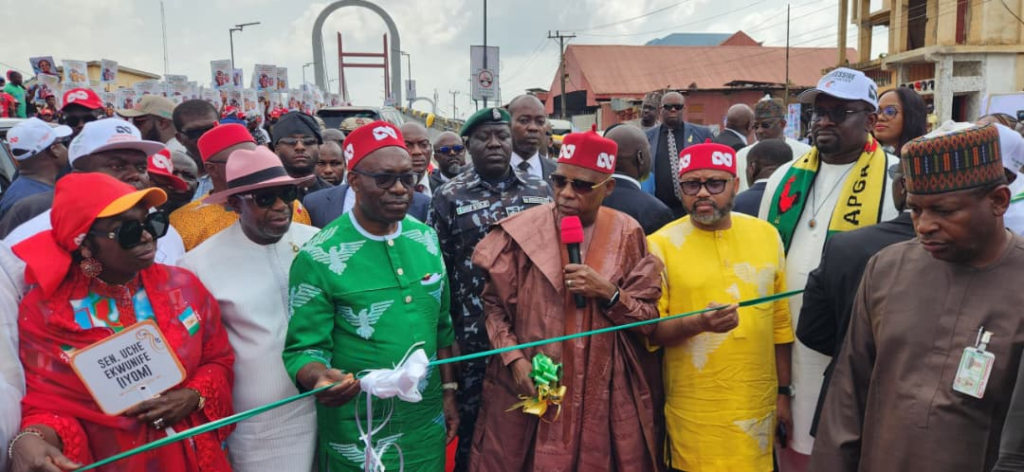
Event marking the inauguration of the Ekwulobia flyover in Anambra State.
The Ekwulobia flyover inauguration in Anambra State. Photo: Anambra State Government.

President Bola Tinubu has approved free trade zone status for the proposed Anambra Industrial City, Vice-President Kashim Shettima said Thursday at an event in Ekwulobia.

Shettima also announced approval to turn the Oba–Nnewi–Okigwe and Otuocha–Abaji roads into dual carriageways. He listed two federal flyover projects in Awka, one at Regina Caeli Junction and the other at Nnamdi Azikiwe University.

The vice-president announced the federal approvals at a ceremony for projects completed by the Anambra State Government, including the Ekwulobia flyover. The industrial city is still described as a proposed development.

Reporting source — Premium Times

By NaijaFeed

Nigeria’s Lassa Fever Cases Rise for Second Week as NCDC Flags Treatment Costs

New confirmed Lassa fever cases in Nigeria rose for a second consecutive reporting week, according to figures from the Nigeria Centre for Disease Control and Prevention reported by Premium Times.

The agency recorded 22 cases in the week ending November 15, up from 18 the previous week and 13 the week before that. The last two reporting weeks accounted for 40 confirmed infections.

NCDC identified high treatment costs and delays in reaching health facilities as continuing problems. The figures describe the reporting period through November 15.

Reporting source — Premium Times, citing NCDC situation reports

By NaijaFeed

Ademola Adeleke Sworn In for Second Term as Osun Governor

Scene at Ademola Adeleke’s second-term inauguration in Osogbo.
Ademola Adeleke’s second-term inauguration in Osogbo on November 27. Photo via Punch.

Ademola Adeleke began his second term as Osun State governor on Friday after taking the oath of office at Osogbo Township Stadium. Osun Chief Judge Adepele Ojo administered the oath. Deputy Governor Kola Adewusi was sworn in earlier at the same ceremony.

Vice-President Kashim Shettima and former Osun governor Adebisi Akande were among those in attendance, according to Punch. The ceremony marked the formal start of a second term for Adeleke and Adewusi.

Reporting source — Punch

By NaijaFeed

Thursday, November 26, 2026

Anambra Plans Six Days of Free Maternal and Child Healthcare

Anambra State says it will run a six-day free healthcare campaign for mothers, newborns and children across its 21 local government areas. The campaign is scheduled for November 28 to December 3 at designated primary healthcare centres.

State Health Commissioner Dr Afam Obidike announced the dates at a briefing and encouraged pregnant women, nursing mothers and caregivers to use the designated centres. The state says the campaign is aimed at reducing preventable deaths among mothers, newborns and children.

The announcement confirms the statewide dates. For families planning a visit, the location of their designated centre and the services available there are the details to confirm locally.

Reporting source — Voice of Nigeria

By NaijaFeed

Mr Latin Hands Over Theatre and Film Association Presidency After Eight Years

Yoruba film actor Bolaji Amusan, better known as Mr Latin, has handed over the presidency of the Theatre Arts and Motion Pictures Practitioners Association of Nigeria to Ajala Jalingo. Amusan announced the transition on Wednesday and shared footage of himself passing the association’s flag to his successor.

Amusan first took office in December 2018 and won a second term in 2022. He said he would remain involved with the association as a member of its Board of Trustees.

TAMPAN represents theatre and film practitioners and has a particularly visible role in the Yoruba-language movie industry. Jalingo takes over the day-to-day leadership of the association, whose work includes representing members’ interests and supporting their welfare.

Reporting source — Punch

By NaijaFeed

Enugu’s National Sports Festival Moves to May 2027

The National Sports Festival was due to begin in Enugu this Saturday, November 28. The 23rd edition, known as the Coal City Games, will instead take place in May 2027 after the National Sports Commission accepted a postponement request from the host state.

The commission announced the decision on November 18. Enugu’s local organising committee apologised for being unable to stage the event during the original November 28 to December 12 window.

The commission says it will work with the Enugu State Government on preparations for May. Its announcement gave the new month, with exact competition dates still to be confirmed.

Reporting source — Federal Ministry of Information and National Orientation

By NaijaFeed

BNXN Leads Apple Music’s Nigeria Chart as Olamide Tops Lagos

BNXN’s “If You Like” led Apple Music’s nationwide Nigeria chart on November 26, while Olamide’s “Jaiye,” featuring FOLA, took the top spot in Lagos, according to chart snapshots compiled by ChartStats.

BNXN also featured on the national chart’s second-place track, Kidd Carder’s “Oh My.” Both tracks appeared in Lagos’s top three alongside “Jaiye,” though listeners in the city put them in a different order.

The rankings offer a snapshot of listening on Apple Music. The national chart covers Nigeria, while the Lagos chart tracks listening in the city.

Reporting sources — Nigeria chart snapshot · Lagos chart snapshot

By NaijaFeed

Abuja Creative Industry Conference Puts Funding and Ownership on the Agenda

Abuja’s Made In Abuja Creative and Entertainment Industry Conference and Award is scheduled for November 26 and 27 at the Chinua Achebe Conference Center in Mamman Vatsa Writers Village. The organiser’s programme lists a conference, a creative marketplace, a runway exhibition and an awards ceremony.

Thursday’s sessions are set to examine how creative businesses raise money, protect intellectual property and get their work to audiences. The programme also brings in fashion, live events and tourism, industries that can share venues, suppliers and audiences with film and music.

Organisers say they plan to publish a summary setting out proposed actions after the conference. That gives participants a way to see which recommendations attract partners and which turn into projects.

Reporting source — MACEiCA organiser’s programme

By NaijaFeed

Super Falcons Name 24-Player Squad for Algeria Friendlies in Algiers

The Nigeria Football Federation has announced a 24-player Super Falcons squad for two friendlies against Algeria. The federation lists both matches in Algiers, with the first on Monday, November 30, and the second on Friday, December 4.

Coach Augustine Eguavoen selected goalkeeper Chiamaka Nnadozie and forward Asisat Oshoala. The squad also includes defenders Michelle Alozie and Shukurat Oladipo, as well as midfielders Jennifer Echegini and Toni Payne.

Captain Rasheedat Ajibade is absent. The NFF says she is recovering from surgery following an injury sustained during Nigeria’s Olympic qualifier against Comoros.

Reporting source — Nigeria Football Federation squad announcement

By NaijaFeed

Nigeria’s Damilola Bolarinde Named Miss International Africa in Tokyo

Portrait of Nigerian pageant representative Damilola Bolarinde.
Damilola Rebecca Bolarinde, Nigeria’s representative at Miss International 2026. Photo via Damilola Bolarinde’s Instagram, as credited by Punch.

Nigeria’s Damilola Bolarinde has been named Miss International Africa 2026 after finishing in the top 20 at the international pageant in Tokyo. The continental title was announced Thursday following the November 25 final.

Bolarinde secured Nigeria’s place at the competition after winning the Miss International Nigeria title in Lagos in April. Her Tokyo appearance followed earlier pageant runs in which she represented Nigeria at Miss Grand International and placed first runner-up at Miss Universe Nigeria in 2025.

The overall Miss International crown went to Moldova’s Elizaveta Kuznetsova. Bolarinde’s continental title recognises her performance among the African contestants.

Reporting source — Punch

By NaijaFeed

Nigeria Unveils Satellite Models for Proposed Earth Observation Constellation

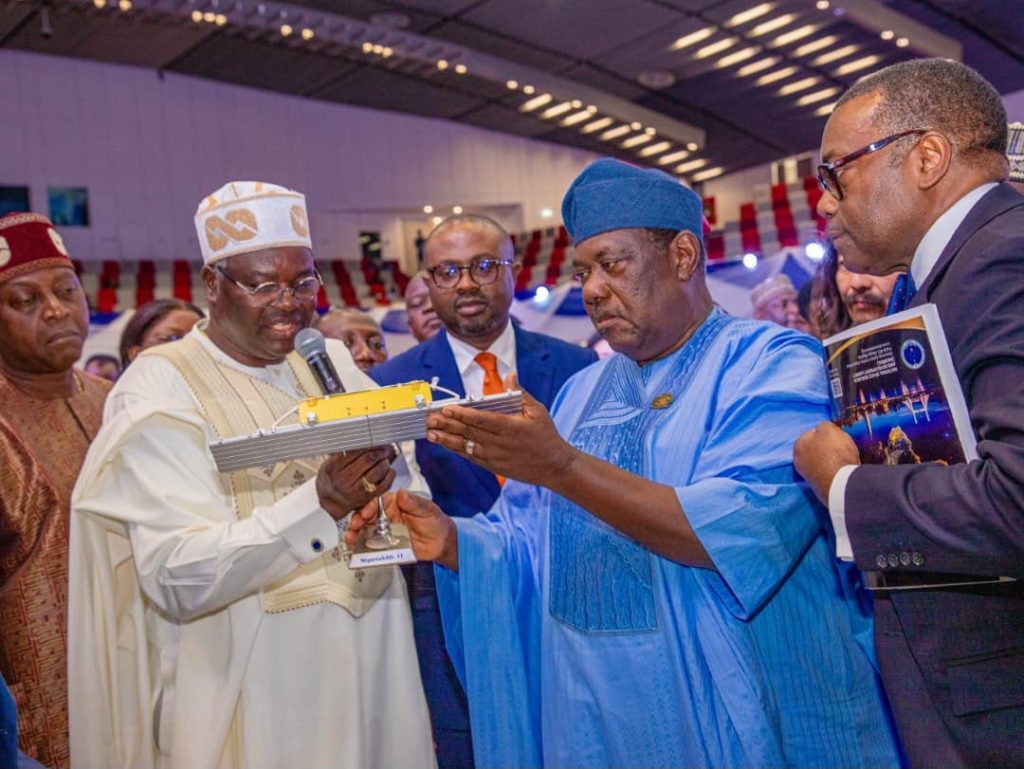
NASRDA’s satellite programme unveiling at a space conference in Abuja.
NASRDA’s unveiling at the Africa Space Economy, Innovation and Communication Conference in Abuja. Photo: Ibrahim Zakari / NASRDA.

Nigeria’s space agency has unveiled models for a proposed Earth observation satellite constellation that would combine radar and optical imaging. The National Space Research and Development Agency presented the models at the Africa Space Economy, Innovation and Communication Conference in Abuja.

NASRDA Director-General Matthew Adepoju said the proposed radar satellites would be able to collect images at night and through cloud cover. The planned optical satellites would capture detailed images of the ground. The agency identified agriculture, environmental monitoring and disaster response among the potential uses.

NASRDA also showcased a facility for assembling and testing satellite components, along with a ground station and mission control centre. Those facilities matter because operating a satellite involves testing it before launch and communicating with it once it reaches orbit. The agency’s November 24 announcement described the proposed constellation and the facilities. It gave no launch date.

Reporting source — NASRDA announcement

By NaijaFeed

Abuja Activates Emergency Centre to Coordinate Cholera Response

The Federal Capital Territory Administration has activated its Public Health Emergency Operations Centre to coordinate the response to an ongoing cholera outbreak. The move brings health officials, water and sanitation agencies and aid partners into a single response structure ahead of the festive season.

FCT epidemiologist Dr Lawal Lukman Ademola was named incident manager. The response will include looking for cases in affected communities, arranging laboratory testing and coordinating treatment and sanitation measures. Officials also plan to increase surveillance in areas considered vulnerable.

The FCT Water Board, the World Health Organization, UNICEF and the Nigerian Red Cross Society were among the organisations represented at the activation meeting. The administration says it will intensify operations in affected communities.

Reporting sources — Voice of Nigeria · Punch

By NaijaFeed

Pete Edochie, Nollywood Icon and the Face of Okonkwo, Dies at 79


Pete Edochie, the broadcaster and actor who played Okonkwo in the Nigerian Television Authority adaptation of Chinua Achebe’s Things Fall Apart, has died at 79. His family announced that he died in Enugu on Wednesday, November 25.

The role brought Edochie to national prominence in the 1980s, before Nollywood’s home-video era made him a familiar face to another generation. He went on to appear in films including Igodo, Rituals and Lionheart. His career linked three eras of Nigerian storytelling: public broadcasting, the rise of home video and the international reach of contemporary Nollywood.

President Bola Tinubu paid tribute to Edochie on Wednesday and offered condolences to his family and the film industry. The family said funeral arrangements would be announced later.

Reporting sources — Family statement as reported by Punch · State House tribute

By NaijaFeed

Wednesday, November 25, 2026

Deaf Nigerians Work to Preserve Indigenous Sign Languages and Cultural Identity

CGTN Africa / YouTube

Deaf communities across Nigeria are working to preserve indigenous sign languages that form an important part of their cultural heritage and everyday communication.

A recent CGTN Africa video report highlights how locally developed signing traditions help people communicate within communities and maintain social connections.

CGTN Africa reported that limited documentation, funding and educational opportunities threaten wider recognition of the languages. Advocates want more Nigerians to have opportunities to learn and use them.

Their preservation involves more than documenting individual gestures. Language carries collective memory, community relationships and cultural identity.

There are also practical questions about how indigenous signing traditions can be recorded, studied and passed on without diminishing the autonomy of the communities that use them.

The story offers a reminder that Nigeria's linguistic diversity extends beyond spoken languages and that accessibility and cultural preservation can reinforce one another.

Reporting sources — CGTN Africa on YouTube

By NaijaFeed

Lagos Targets 6,000km Fibre Network and 10% Startup Share of Public Procurement

The Lagos State Government has outlined plans to expand its fibre-optic infrastructure and increase opportunities for technology startups through public procurement.

The state is targeting a network of approximately 6,000 kilometres, compared with an existing footprint reported at 2,400 kilometres.

Officials have also proposed reserving 10% of public procurement opportunities for startups, an initiative intended to help emerging businesses participate more directly in the state's economy.

Fibre infrastructure provides an important foundation for faster and more reliable internet connectivity, supporting businesses, educational institutions, digital services and emerging technology companies.

Improving network access could also help reduce some of the barriers facing startups that depend on reliable connectivity to develop and deliver products.

However, the effectiveness of the proposals will depend on implementation, including construction timelines, funding, transparent procurement rules and the eligibility criteria used for startup participation.

The expansion target and procurement initiative are announced plans, not completed outcomes.

Reporting sources — Punch · BusinessDay

By NaijaFeed

Related Stories

FIFA President Says Nigeria Needs Major Infrastructure Upgrades to Host World Cup

FIFA President Gianni Infantino has said Nigeria is not currently equipped to host the men's FIFA World Cup, pointing to major infrastructure requirements that would need to be addressed before a future bid.

Speaking during an interview with ARISE News in Abuja on Monday, November 23, Infantino acknowledged Nigeria's footballing passion and potential while identifying shortcomings in facilities and transportation.

Hosting a World Cup requires considerably more than suitable football stadiums. Organisers must demonstrate adequate airport capacity, transport connections, accommodation, security arrangements and the ability to manage large international crowds.

Infantino's comments followed a visit to Nigeria during which he also examined football development projects, including infrastructure associated with the Nigeria Football Federation.

Although Nigeria has a significant football culture and a record of hosting international competitions, successfully staging a men's World Cup would involve extensive investment and long-term planning.

The broader question is whether future investment in sports infrastructure can also produce lasting benefits for Nigerian communities, domestic competitions and youth football development.

Reporting sources — Premium Times · Punch

By NaijaFeed

Related Stories

Tinubu Seeks ₦3.15 Trillion Reduction in Nigeria's 2026 Budget

President Bola Tinubu has asked Nigeria's National Assembly to approve a reduction of approximately ₦3.15 trillion in the federal government's 2026 budget.

The proposal would lower total planned expenditure from about ₦68.32 trillion to ₦65.18 trillion.

Despite the reduction, the government's projected fiscal deficit would remain approximately ₦31.46 trillion, equivalent to 5.64% of gross domestic product under the figures presented to lawmakers.

Tinubu’s request was read in the House of Representatives on November 24. The administration says the bill would account for certain NNPC expenditures incurred on behalf of the federation, address debt-service obligations and provide for outstanding commitments. The government would retain its proposed ₦29.22 trillion borrowing plan.

However, the changes have not yet become law. The National Assembly must consider the proposed legislation before the revised budget can take effect.

For Nigerians, the most consequential details will be which spending commitments are reduced, whether priority projects are preserved, and how the government intends to manage its financing requirements.

Reporting sources — Premium Times · Punch

By NaijaFeed

Related Stories

CBN Holds Interest Rate at 23% Despite Further Decline in Inflation

The Central Bank of Nigeria has left its benchmark interest rate unchanged at 23%, opting for caution despite a continued slowdown in consumer price inflation.

The decision was announced on Tuesday, November 24, following the Monetary Policy Committee's two-day meeting in Abuja.

According to figures considered by policymakers, Nigeria's annual headline inflation rate fell to 14.06% in October from 14.63% in September.

The committee said keeping its policy stance would help anchor inflation expectations and sustain the slowdown in price increases. It also retained its existing cash reserve requirements for commercial and merchant banks. Policymakers have also identified potential risks associated with seasonal spending, election-related expenditure and developments in global energy markets.

For Nigerian households, a lower inflation rate does not necessarily mean prices are falling. It means prices are increasing more slowly than before.

For businesses and borrowers, the unchanged benchmark rate signals that the central bank is not yet ready to substantially loosen monetary conditions, even as inflation moderates.

The decision places continued emphasis on price stability while leaving questions about credit costs, investment and economic growth at the centre of Nigeria's monetary policy debate.

Reporting sources — CBN November communiqué

By NaijaFeed

Related Stories


Tuesday, November 24, 2026

Nigeria's Diesel Imports Jump 917% Despite High Dangote Refinery Output

Illustration of a tanker truck beside a refinery and port terminal at golden hour.
Illustration: NaijaFeed. Generic refinery and fuel-distribution infrastructure, not an identified Dangote facility.

Nigeria's diesel imports rose sharply in October 2026 despite strong production at the Dangote Petroleum Refinery, highlighting the complicated relationship between domestic refining, fuel exports and the country's continuing need for imported products.

Figures attributed to the Nigerian Midstream and Downstream Petroleum Regulatory Authority (NMDPRA) show that average diesel imports increased from approximately 600,000 litres per day in September to 6.1 million litres per day in October.

That represents a rise of about 917 percent from the previous month's comparatively low level.

The increase occurred alongside a substantial improvement in domestic diesel supply, rather than a collapse in local production.

Diesel supply almost doubles

Automotive gas oil, commonly known as diesel, is widely used in Nigerian transport, industry and electricity generation.

According to the regulator's October figures, average daily diesel receipts rose to 16.8 million litres from 8.7 million litres in September, an increase of approximately 93 percent.

Domestic supply increased from 8.1 million litres per day to 10.7 million litres, while imports accounted for about 6.1 million litres of October's daily receipts.

That means imported diesel represented approximately 36 percent of the month's total recorded receipts.

Average diesel consumption also increased, rising to approximately 15.5 million litres per day.

The figures indicate that stronger local supply and increased imports contributed to improved availability during the month.

Why Dangote's production matters

The Dangote refinery has substantially expanded Nigeria's ability to process crude oil and manufacture refined petroleum products.

Regulatory data cited in energy-sector reporting indicate that the refinery produced an average of 25.14 million litres of diesel per day in October.

However, about 52 percent of that output was reportedly exported.

The distinction between total refinery production and the quantity delivered into Nigeria's domestic market is important.

A refinery can produce large volumes while allocating some of its output to international customers, depending on commercial contracts, demand, logistics and pricing.

Consequently, high production does not necessarily eliminate the need for imports in every reporting period.

What the numbers reveal

October's increase in diesel imports must also be understood in the context of September's low import base.

A large percentage increase does not automatically mean the same proportionate deterioration in the wider fuel market.

At the same time, the regulator's figures show that diesel inventory cover declined from approximately 49.7 days to 43.9 days despite stronger receipts.

That suggests the market continued to face pressure from consumption, stock movements and distribution requirements.

For Nigeria, the policy challenge is no longer simply whether the country can refine more petroleum products.

It is also how reliably domestic production reaches local consumers, how importers respond to demand and how the country balances its growing export opportunities against fuel requirements at home.

The latest figures illustrate progress in refining capacity alongside continuing complexity in Nigeria's downstream petroleum market.

Reporting sources: NMDPRA October figures as reported by BusinessDay and The Government and Business Journal.

By NaijaFeed

Related Stories

Nigerian Military Says Airstrikes Killed 37 Militants in North-East Operations

The Nigerian military says air operations conducted across the North-East between November 16 and 23 killed 37 suspected militants and destroyed four vehicles believed to have been used by insurgents.

The operations were carried out by the air component of Operation Hadin Kai, the military campaign against armed extremist groups operating in the region.

According to a military statement issued on Monday, November 23, six intelligence-led airstrikes were conducted across five locations, principally in Borno State.

The reported death toll comes from the military's own post-strike assessments and has not been independently confirmed.

Operations around Monguno, Marte and Kukawa

The military said one of the strikes took place on November 16 after intelligence indicated that approximately 40 suspected militants were moving northeast of Monguno, allegedly preparing to attack troops.

It reported that ten fighters were killed in the operation and several others injured.

The following day, surveillance aircraft reportedly identified a building at Arina Chiki suspected of being used as a staging location for an attack.

The military said that facility was struck and subsequently observed to have been destroyed.

Further operations took place on November 20 near Kerenoa and in the Fage area of Marte Local Government Area.

According to the military, aircraft targeted vehicles linked to insurgent movements and suspected preparations involving improvised explosive devices.

On November 23, another operation in the Tumbuma Baba area of Kukawa Local Government Area reportedly destroyed a vehicle and targeted a group of suspected fighters.

Military describes intelligence-led campaign

Operation Hadin Kai has continued to combine ground deployments, aerial surveillance and strikes against insurgent activity in the North-East.

Military officials say intelligence and surveillance systems were used to identify targets during the latest operations.

However, independently establishing the full outcome of airstrikes in remote conflict areas can be difficult.

Reports of casualties, including whether those killed were combatants, require credible verification beyond the military's initial assessments.

No independent confirmation of the aggregate 37 fatalities was identified in the reports reviewed.

A conflict with lasting consequences

Communities in the North-East have endured years of insurgent violence, displacement and disruption to farming, trade and education.

The destruction of insurgent equipment may limit the ability of armed groups to move or conduct attacks, but individual military operations do not by themselves establish a lasting improvement in civilian security.

The continuing challenge is protecting communities, preventing further attacks and creating the conditions for displaced residents to return safely.

The military presents the latest strikes as evidence of pressure on insurgent logistics and planned attacks.

Further independently verifiable information will be needed to assess their broader impact.

Reporting sources: Nigerian military statement as reported by Voice of Nigeria, Premium Times and Punch.

By NaijaFeed

Related Stories

Bayelsa Boat Disaster Claims 29 Lives as Government Promises Tougher Safety Measures

The death toll from a boat accident in Bayelsa State has risen to 29, as the federal government promises stronger safety measures for passengers travelling on Nigeria's inland waterways.

The tragedy occurred on Friday, November 20, near the Oweikorogha and Otuan river junction in Southern Ijaw Local Government Area.

The vessel was carrying people travelling to a burial ceremony when it capsized, leaving families in several riverine communities grieving.

During a condolence visit to Yenagoa on Sunday, Vice President Kashim Shettima conveyed President Bola Tinubu's condolences and a commitment to improve water transport safety.

More than 50 passengers survived

Bayelsa State Governor Douye Diri told visiting federal officials that 29 deaths had been recorded by Sunday afternoon, while more than 50 passengers had survived.

The state government has assumed responsibility for the medical treatment of survivors.

Rescue and recovery operations involved emergency agencies, security personnel, local divers and community volunteers.

The federal government also announced ₦250 million in financial assistance for families affected by the disaster.

While the assistance may provide immediate relief, attention is turning to the circumstances of the accident and how similar tragedies can be prevented.

Questions about safety enforcement

Governor Diri has attributed the incident to an alleged failure by boat operators to observe established safety protocols.

The state government has established a committee to investigate the immediate and underlying causes.

Those preliminary concerns should not be mistaken for a completed investigation or a definitive finding of responsibility.

In many communities across the Niger Delta, water transportation is essential. Residents depend on boats to reach markets, schools, hospitals and neighbouring settlements.

That dependence makes vessel maintenance, passenger loading procedures, life jackets and effective oversight particularly important.

A recurring national concern

Boat accidents have repeatedly exposed safety challenges in Nigeria's riverine and inland-waterway communities.

Authorities face the difficult task of enforcing regulations across large and sometimes remote networks of rivers and creeks.

Effective enforcement must also be accompanied by practical support for boat operators, accessible safety equipment and emergency-response capacity.

The federal government's response includes a pledge to strengthen vessel inspections and enforcement of waterway safety standards.

The measure of that commitment will be whether meaningful improvements follow once public attention moves away from the tragedy.

For families who have lost loved ones, the immediate priority is support and accountability. For the wider country, the challenge is ensuring that essential journeys do not continue to carry preventable risks.

Reporting sources: Federal Ministry of Information and National Orientation; Premium Times.

By NaijaFeed

Related Stories

UNICEF Identifies 624,000 Out-of-School Children Across Three Northern Nigerian States

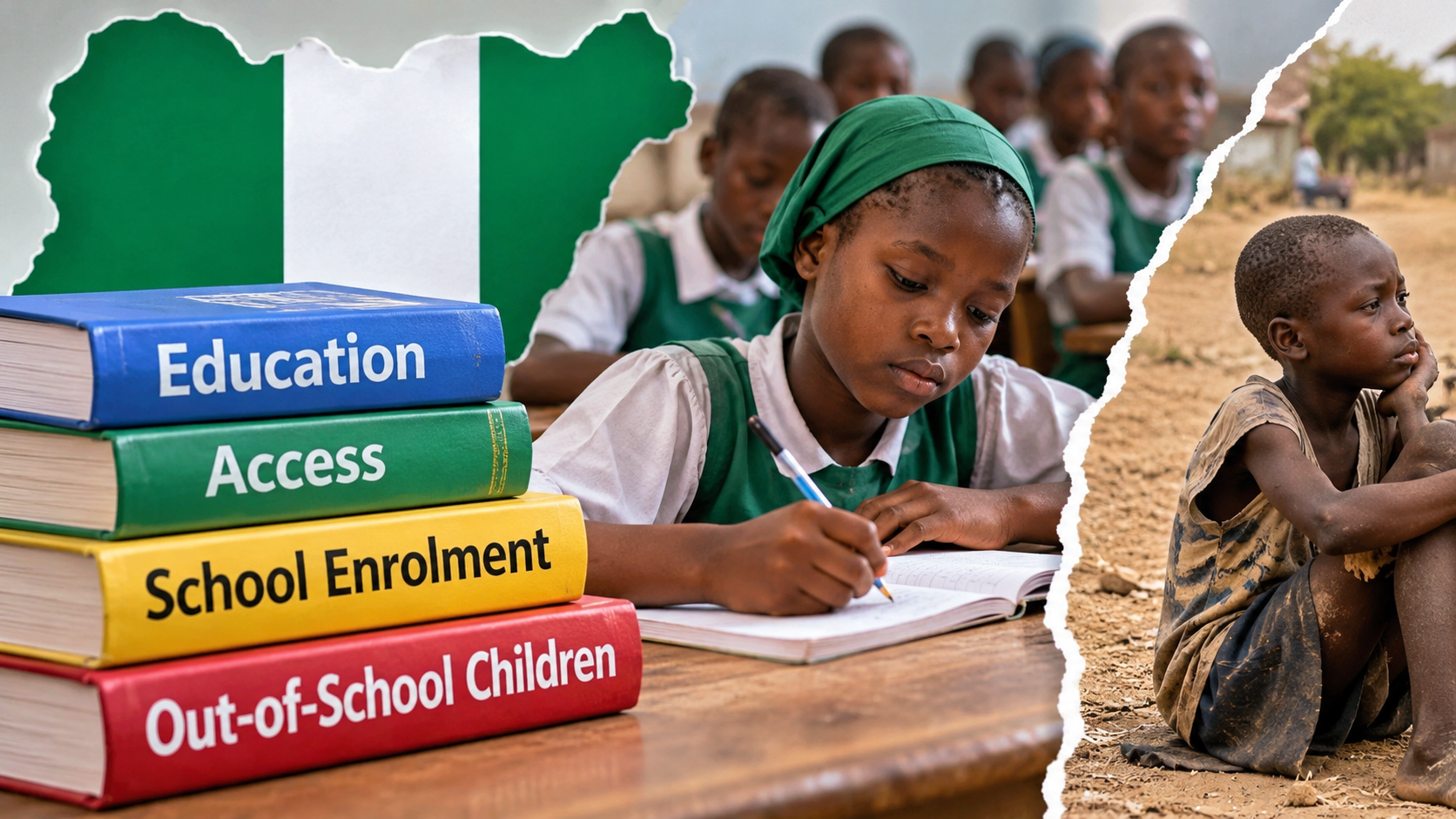
Illustration of schoolbooks, a classroom and a child outside school.
Illustration: NaijaFeed. Artistic representation of the challenges of accessing education in Nigeria.

The United Nations Children's Fund (UNICEF) says approximately 624,000 out-of-school children have been identified across Sokoto, Kebbi and Zamfara states, highlighting the continuing challenge of access to education in northwestern Nigeria.

The figures were disclosed during discussions on children's welfare and educational access involving UNICEF and state authorities.

According to UNICEF, about 68,000 of the children identified have so far been reached through efforts to bring them back into formal learning.

The figures underline both the scale of the problem and the considerable work remaining to ensure that children who are outside the education system can return to school.

Education access remains uneven

The three states face overlapping challenges involving poverty, insecurity, displacement, household responsibilities and limited access to suitable educational facilities.

Those factors can make regular school attendance difficult, particularly for vulnerable children.

Girls and children in Almajiri educational arrangements were among the groups highlighted in discussions about improving access to learning.

UNICEF's figures relate specifically to children identified through work across Sokoto, Kebbi and Zamfara.

They should not be presented as the total number of out-of-school children in northern Nigeria or the country as a whole.

Beyond returning children to classrooms

Re-enrolment is an important measure of progress, but it is only the first stage of improving educational outcomes.

Children who have spent long periods outside school may need additional support to develop reading, writing and numeracy skills.

UNICEF also reported that approximately 98,000 children participated in its Teaching at the Right Level programme, which focuses on foundational learning.

The initiative is designed to help pupils build essential literacy and numeracy skills according to their current abilities.

Those participating in the learning programme should not automatically be counted as additional children newly returned to school, because the two reported figures describe different interventions and may overlap.

The challenge of lasting progress

Improving attendance requires more than short-term enrolment drives.

Schools must be safe and accessible, teachers need adequate training and support, and families require confidence that education offers meaningful opportunities for their children.

In areas affected by insecurity, authorities may also need to address school closures, damaged facilities and concerns about travel to and from classrooms.

State governments and development partners face the challenge of sustaining programmes even as international humanitarian and development funding remains under pressure.

The reported 624,000 children represent a substantial responsibility for education authorities.

The longer-term measure of success will be how many children enter suitable learning environments, remain there and develop the skills needed for their futures.

Reporting sources: UNICEF figures reported by Channels Television and Radio Nigeria.

By NaijaFeed

Related Stories

FIFA President Inspects New Abuja Football Centre as Training Facilities Take Shape

Artistic impression of football training pitches, accommodation and construction work.
Illustration: NaijaFeed. Artistic impression of a football training complex, not a depiction of the completed Abuja project.

FIFA President Gianni Infantino has inspected a new football training and accommodation complex under construction in Abuja, highlighting an infrastructure project intended to support Nigeria's national teams and young players.

The facility, located at the MKO Abiola National Stadium, is being developed through FIFA's Forward programme in partnership with the Nigeria Football Federation (NFF).

Infantino visited the site on Friday, November 20, during a trip that also included the renovated Warri City Stadium in Delta State.

What is being built in Abuja?

According to FIFA, the new technical centre will include a 68-room accommodation wing for players, along with a kitchen, restaurant, meeting rooms, a sauna and other supporting facilities.

The project also includes two new training pitches, changing rooms for players and officials, and spectator terraces with seating for 1,838 people.

Construction began in March 2025, and the complex is expected to serve as a base for Nigeria's national teams once completed.

The NFF reported that work on the natural-grass training pitch had reached approximately 60 percent completion at the time of Infantino's visit.

That figure refers to the pitch's progress and should not be interpreted as a completion percentage for the entire development.

The federation said drainage systems and other essential groundwork had already been installed.

Investment in Nigeria's football future

Training infrastructure is a longstanding challenge for developing national football programmes.

Suitable pitches, accommodation and support facilities can reduce logistical difficulties and provide more consistent environments for athletes preparing for international competitions.

The Abuja centre is intended to support different levels of Nigerian football, including men's and women's national teams, youth development and grassroots activities.

Its longer-term value will depend on how the complex is maintained, who can access it and whether it is integrated into sustained player-development programmes.

Infantino also visits Warri

During the same trip, Infantino toured the renovated Warri City Stadium alongside Delta State Governor Sheriff Oborevwori.

FIFA said the upgraded venue includes a hybrid-grass football pitch, an athletics track, swimming pool, indoor sports facilities and improved drainage.

The two projects represent different approaches to sports infrastructure: one focused on a dedicated national-team training base, the other on rehabilitation of a multipurpose stadium.

For the NFF, completing the Abuja complex is only the first major test.

Ensuring that the facilities remain operational, accessible and useful to successive generations of Nigerian players will determine whether the investment achieves its promise.

Reporting sources: FIFA and Nigeria Football Federation.

By NaijaFeed

Related Stories

SERAP Sues INEC Over Suspected AI-Generated Photos in Nigeria's Voters' Register

Illustration of a ballot box, paperwork and a tablet at a Nigerian polling station.
Illustration: NaijaFeed. Conceptual depiction, not an INEC database screenshot.

Nigeria's preparations for the 2027 general elections are facing renewed scrutiny after the Socio-Economic Rights and Accountability Project (SERAP) filed a lawsuit over suspected artificial intelligence-generated photographs and other irregularities in the preliminary voters' register.

The lawsuit, filed at the Federal High Court in Abuja under suit number FHC/ABJ/CS/2863/2026, names the Independent National Electoral Commission (INEC) and the Nigeria Data Protection Commission (NDPC).

SERAP wants the data protection regulator to independently examine the disputed records and determine whether Nigeria's data protection laws have been breached.

What triggered the lawsuit?

The controversy follows disclosures by INEC about questionable entries in its preliminary voter register, including photographs suspected of being artificially generated.

SERAP's account of an earlier disclosure refers to 268 records reportedly flagged for review by INEC's Automated Biometric Identification System.

Separately, INEC announced on November 9 that a much larger review had examined 268,000 cases following additional public complaints. Of those cases, 217,722 registrations were invalidated and 50,278 retained.

These are different reported figures from different stages of the verification process. They do not establish that every flagged record involved AI-generated imagery.

INEC also announced that it had removed more than 1.6 million confirmed invalid registrations from the preliminary register and identified 54 individuals across ten states for further investigation over alleged registration irregularities.

The demand for independent scrutiny

SERAP argues that the allegations require scrutiny beyond the electoral commission's internal review.

It is asking the court to direct the NDPC to examine relevant records, electronic data and registration procedures, and determine whether corrective or enforcement action is warranted under the Nigeria Data Protection Act 2023.

No court finding has established that the defendants violated the law.

Why AI matters for elections

Public concern about artificial intelligence and elections has often centred on deepfake campaign videos and manipulated political statements.

The voter-register controversy raises a different issue: whether the underlying information used to administer an election is reliable and securely maintained.

Suspicious registration photographs could create difficulties for identity verification, while inadequate safeguards could also expose legitimate voters to errors or wrongful exclusion.

The register under examination remains preliminary, making transparent correction procedures especially important.

For Nigerian voters, the central question is whether the electoral authorities can demonstrate that registration information is authentic, accurately maintained and subject to credible oversight.

The lawsuit could become an important test of how Nigeria's electoral and data protection institutions respond to emerging technological risks ahead of 2027.

Reporting sources: Premium Times and Punch; INEC statements as reported by Premium Times.

By NaijaFeed

Related Stories

Monday, November 23, 2026

Patience Ozokwor and Ebele Okaro Visit Joke Silva Following Olu Jacobs' Death

Veteran Nollywood actresses Patience Ozokwor and Ebele Okaro have paid a condolence visit to their colleague Joke Silva following the death of her husband, celebrated Nigerian actor Olu Jacobs.

The visit came several weeks after Jacobs was laid to rest in Lagos and offered another public expression of support for Silva from colleagues in the Nigerian film industry.

Ozokwor shared footage of the meeting on social media on Sunday, November 22, 2026.

A moment of friendship and support

In the video, Ozokwor is seen signing a condolence register before Silva arrives to welcome her visitors.

Ozokwor and Okaro then exchange greetings with Silva and spend time together.

The visit attracted attention because the actresses have been familiar faces in Nigerian film and television for decades.

Ozokwor, widely known to audiences as Mama G, had been unable to attend Jacobs' funeral because of professional commitments outside Nigeria.

She had previously expressed regret over missing the ceremony and the opportunity to pay her respects in person.

Her subsequent visit with Okaro allowed the actresses to offer their condolences directly to Silva.

The gathering was not a public ceremony or industry event. Its significance lay in a personal expression of friendship and solidarity during a period of bereavement.

Remembering Olu Jacobs

Jacobs died on September 16, 2026, at the age of 84, following a distinguished career spanning theatre, television and film.

He was buried in Lagos on October 2.

Over several decades, Jacobs became one of the most recognisable figures in Nigerian acting, building a career that included work in both domestic and international productions.

His contribution to Nollywood helped shape the industry's growth and its recognition beyond Nigeria.

Silva, herself an accomplished actress and producer, shared a long personal and professional partnership with Jacobs.

The couple also worked together through the Lufodo Group, which has been involved in Nigerian theatre, film and creative development.

Nollywood's enduring relationships

Tributes and condolence visits following Jacobs' death have highlighted the close professional relationships that developed among generations of Nigerian actors.

For colleagues who worked alongside him or admired his contribution to the industry, his passing marked the loss of an important figure in Nigerian entertainment history.

The visit by Ozokwor and Okaro also demonstrated the support being offered to Silva as she continues to mourn her husband.

While the public remembers Jacobs for his performances and influence, the meeting was a reminder that behind his long career was a family and a community of colleagues experiencing a personal loss.

Reporting sources: The Guardian Nigeria and Independent.

By NaijaFeed

Related Stories

Super Eagles Face Crucial March Qualifiers After Tanzania Draw Leaves AFCON 2027 Hopes Under Pressure

Nigeria's Super Eagles face a difficult final stretch in qualification for the 2027 Africa Cup of Nations after a goalless draw against Tanzania left them three points behind Group L leaders Guinea-Bissau.

The 0–0 result in Zanzibar on November 17, 2026, followed Nigeria's 3–1 victory over Tanzania in Uyo four days earlier.

Although the home victory briefly strengthened Nigeria's qualification prospects, the away draw allowed Guinea-Bissau to extend their advantage at the top of the group.

With four matches played, Guinea-Bissau lead with 10 points, while Nigeria sit second with seven.

How Nigeria reached this position

The Super Eagles began their qualifying campaign with a 2–1 victory over Madagascar in September.

That positive start was followed by a damaging 3–0 defeat away to Guinea-Bissau, which handed Nigeria's main rivals an important advantage.

Nigeria responded with a 3–1 victory over Tanzania on November 13, with Tolu Arokodare scoring twice during the second half.

However, Eric Chelle's side could not reproduce that result when the teams met again in Zanzibar.

The goalless draw proved particularly costly because Guinea-Bissau defeated Madagascar 2–0 on the same day.

That combination of results widened the gap between the two qualification rivals to three points.

Two decisive matches remain

Nigeria's remaining fixtures are scheduled for March 2027:

  • March 24: Madagascar vs Nigeria
  • March 28: Nigeria vs Guinea-Bissau

Winning both matches would take the Super Eagles to 13 points.

However, that may not guarantee qualification. Guinea-Bissau also have a remaining fixture against Tanzania, and if they win it before losing to Nigeria, both teams could finish level on 13 points.

In that situation, the competition's tie-breaking rules would become decisive.

The 3–0 defeat Nigeria suffered in Guinea-Bissau could become particularly significant if head-to-head results are needed to separate the teams.

No room for another setback

Tanzania, alongside Kenya and Uganda, already has a place at the 2027 tournament as a co-host.

That leaves Nigeria competing with the other Group L teams for the remaining qualification opportunity.

Nigeria still have a route to the finals, but they no longer control every possible outcome solely through their own points total.

The March fixtures will demand both results and improved performances, especially against Guinea-Bissau.

For a country with a long history of success at the Africa Cup of Nations, missing another major tournament would be a substantial disappointment.

The Super Eagles have time to regroup before March, but their margin for error has become considerably smaller.

Reporting sources: Reuters, Punch and Daily Post Nigeria.

By NaijaFeed

Related Stories

Nigeria Approves Additional ₦130 Billion to Upgrade Police Training Facilities

Nigeria's National Economic Council (NEC) has approved an additional ₦130 billion to rehabilitate police training institutions across the country, bringing the total funding commitment for the programme to ₦230 billion.

The decision was announced following the council's 162nd meeting on Monday, November 23, 2026, chaired by Vice-President Kashim Shettima.

The new funding builds on an earlier ₦100 billion approval and is intended to improve training facilities as the federal government prepares to expand police recruitment.

Upgrading Nigeria's police colleges

The rehabilitation programme is overseen by an NEC committee chaired by Enugu State Governor Peter Mbah.

According to reports from the meeting, work is underway at 13 locations nationwide, with approximately 30 percent of the rehabilitation programme completed.

The additional allocation is expected to support construction and repairs, improve training infrastructure and increase the institutions' capacity to accommodate new recruits.

Nigeria has proposed recruiting 50,000 police personnel as part of broader efforts to strengthen law enforcement in response to persistent security threats.

That recruitment goal places additional pressure on existing police colleges, which must provide suitable accommodation, classrooms and practical training facilities.

Training and accountability remain critical

Nigeria's police face significant challenges, including armed banditry, kidnapping, insurgency and other forms of violent crime.

Expanding the force may improve personnel coverage, but recruitment alone will not determine whether communities become safer.

Training quality, operational equipment, supervision, professional standards and accountability will also affect how effectively newly recruited officers perform their duties.

The rehabilitation programme comes amid continuing debate over proposals to establish state police forces.

Supporters of state policing argue that locally accountable security organisations could respond more effectively to community-level threats. Critics have raised concerns about funding, oversight and the possibility of political misuse.

The additional ₦130 billion approval does not itself establish state police or guarantee improved policing outcomes.

For the government, the next test will be how quickly the approved funds translate into completed facilities and whether the upgraded institutions can deliver effective training.

Reporting sources: Voice of Nigeria and Premium Times.

By NaijaFeed

Related Stories

Nigeria Opens 2026 Oil and Gas Licensing Round With 40 Blocks Available to Investors

Nigeria has opened registration for its 2026 oil and gas licensing round, offering 40 petroleum blocks to qualified investors as the government seeks to attract new exploration activity and expand the country's energy resources.

The Nigerian Upstream Petroleum Regulatory Commission (NUPRC) confirmed that the exercise commenced on November 20, 2026, through its dedicated online licensing portal.

The blocks are divided among three operating environments: 17 onshore, 14 shallow-water and nine deep-offshore prospects.

The round is being conducted under the Petroleum Industry Act of 2021, which provides the framework for awarding Petroleum Prospecting Licences.

How the bidding process works

Interested companies must first register and submit the required corporate, technical and financial documents.

According to the NUPRC's published guidelines, applications must be submitted by 4:30 p.m. West Africa Time on January 15, 2027. The commission's online registration page separately displays a registration closing time of 11:59 p.m. WAT on the same date. Prospective bidders should follow the applicable requirements and deadlines specified by the regulator.

The NUPRC will then evaluate applicants before notifying those that qualify to proceed to the bidding stage.

A pre-bid conference is scheduled for December 16, 2026, in Lagos, while technical and commercial bid submissions are expected to take place between February 2 and April 15, 2027.

The commercial bid conference is scheduled for May 7, 2027.

The process allows Nigerian and foreign investors to participate, although a Petroleum Prospecting Licence can only be granted to a company incorporated in Nigeria.

Why the licensing round matters

Nigeria is seeking fresh investment in its upstream petroleum industry, where exploration, financing and production development remain central to government revenue and energy-sector growth.

Offering new acreage gives companies an opportunity to evaluate potential reserves, but acquiring an exploration licence is not the same as discovering commercially viable oil or beginning production.

Investors must still complete the qualification process, secure licences, assess the available geological data and carry out the necessary exploration work.

The regulator says the licensing round is intended to support reserve growth, future production capacity, gas development and greater participation by Nigerian companies.

Its online platform includes block information, technical guidance, application requirements and the official timetable.

For the federal government, the eventual measure of success will extend beyond the number of bidders attracted. The longer-term question is whether the licensing round produces sustained exploration investment, viable discoveries and new production capacity.

Reporting sources: Official NUPRC licensing portal, NUPRC guidelines, Channels Television

By NaijaFeed

Related Stories

CBN Begins Two-Day Interest Rate Meeting as Nigerians Await Policy Decision

Nigeria's Central Bank has begun a two-day Monetary Policy Committee meeting in Abuja, with businesses, borrowers and investors awaiting its next decision on interest rates.

The 308th meeting of the Central Bank of Nigeria's Monetary Policy Committee is scheduled for Monday, November 23, and Tuesday, November 24, 2026, at the bank's headquarters in Abuja.

The committee will review monetary and economic conditions before deciding whether to maintain or adjust the benchmark Monetary Policy Rate (MPR).

Why the decision matters

The benchmark rate is one of the central bank's main tools for influencing borrowing conditions and controlling inflation.

Higher rates generally make credit more expensive, potentially increasing financing costs for businesses and households. Lower rates can ease borrowing pressures, although their effects depend on how commercial banks respond and on wider economic conditions.

The CBN's previous Monetary Policy Committee meeting in September set the benchmark rate at 23 percent. The November meeting comes as policymakers continue weighing the need to manage inflation against the importance of supporting economic activity.

For Nigerian businesses, the decision matters because access to affordable financing affects working capital, investment and expansion plans. Banks, bond investors and foreign-exchange market participants will also be watching the committee's assessment of economic conditions.

Attention turns to Tuesday's announcement

The CBN's official notice confirms that the committee's first session was scheduled to begin at 10 a.m. on Monday, with the second day's proceedings beginning at 8 a.m. on Tuesday.

The bank has not yet announced the outcome of this meeting.

Beyond the headline interest rate, attention will turn to the committee's explanation of inflation risks, liquidity conditions and the outlook for the Nigerian economy.

The central question is whether policymakers believe inflationary pressures have eased enough to justify further monetary relaxation, or whether maintaining restrictive conditions remains necessary.

For Nigerians facing elevated financing and living costs, the announcement will be another important signal of the central bank's economic priorities.

Reporting sources: CBN official MPC notice, CBN official monetary policy decisions

By NaijaFeed

Related Stories

Chioma Ajunwa's Lifetime Athletics Ban Lifted After More Than Two Decades

Nigerian Olympic champion Chioma Ajunwa-Opara has been cleared to participate in athletics again after the Athletics Integrity Unit (AIU) reduced the lifetime suspension imposed on her more than two decades ago.

The decision, dated November 18, 2026, brings an end to a sanction arising from a second anti-doping violation recorded in the early 2000s.

Ajunwa, who made Nigerian sporting history by winning the women's long jump gold medal at the 1996 Atlanta Olympic Games, had been barred from the sport following a positive test involving nandrolone in 2002.

The original lifetime sanction was recorded in 2003 under the anti-doping rules then in effect.


Why the ban was reconsidered

The ruling followed an application submitted on Ajunwa's behalf in August 2026, requesting a review of the sanction under updated World Athletics anti-doping regulations.

Under the newer rules, athletes serving penalties imposed under earlier regulations may seek a reduction where the current framework would produce a less severe punishment.

Reports describing the AIU's decision say the sanction applicable to Ajunwa's second violation was recalculated as an eight-year period of ineligibility.

Because she had already served substantially longer than that period, the lifetime restriction was reduced to time already served.

Importantly, the decision does not erase her previous anti-doping violations or overturn the underlying findings. It changes the remaining duration of the sporting sanction.

A significant moment for a Nigerian sporting pioneer

Ajunwa became a national sporting icon when she won Olympic long jump gold in Atlanta with a leap of 7.12 metres.

Her achievement made her Nigeria's first individual Olympic gold medallist and remains one of the country's most celebrated athletics performances.

Before her success in track and field, she had also represented Nigeria in women's football, including at the 1991 FIFA Women's World Cup.

The lifting of the lifetime restriction does not necessarily mean Ajunwa intends to return to competitive long jumping.

Its more immediate significance is that she is no longer subject to the previous lifetime prohibition on participating in athletics activities, potentially including coaching, administration and other official sporting roles.

For Nigerian athletics, the development revisits a difficult episode in the career of one of the country's most accomplished Olympians while highlighting how changes to sporting regulations can affect sanctions imposed many years earlier.

By NaijaFeed

Related Stories

Friday, November 20, 2026

Nigeria moves to end jail terms for attempted suicide

Nigerian President Bola Tinubu has asked parliament to decriminalise attempted suicide, proposing medical support instead of prosecution for those who survive.

The proposal seeks to shift Nigeria's approach from criminal punishment to treatment and rehabilitation.

It follows years of calls for reform from mental health professionals. A separate bill seeking to decriminalise attempted suicide has already passed its second reading in the Senate.

Under Nigeria's law, attempted suicide is a criminal offence with those convicted facing up to one year's imprisonment, a fine or both.

The Senate bill also seeks to replace criminal penalties for attempted suicide with medical treatment, rehabilitation and support.

It was sponsored by Senator Asuquo Ekpenyong, who has argued that prosecuting people who survive suicide attempts could discourage those experiencing suicidal thoughts from seeking help.

He also warned that families might conceal such incidents for fear of prosecution and social stigma.

He stressed that the bill is not aimed at legalising or encouraging suicide attempts but rather protecting the survivors.

Tinubu's proposal has been welcomed by Senate President Godswill Akpabio, who had previously suggested that people who survived suicide attempts should be sent to prison.

"We are saying that suicide is a crime for now. Therefore, if you attempt it, we will send you to prison," Akpabio had said.

However, after receiving the Tinubu's proposal, he sought to clarify his earlier remarks, saying they did not apply to people experiencing mental health conditions.

He added that punishing people whose actions were influenced by mental health conditions would be insensitive.

Tinubu's letter follows sustained calls from mental health professionals for the law to be changed.

At a parliamentary public hearing in May 2024, the then president of the Association of Psychiatrists of Nigeria, Professor Taiwo Obindo, urged lawmakers to remove criminal penalties for attempted suicide.

"Why do we, as a nation, then punish individuals who are ill and need medical attention rather than prosecution?" he asked.

Drawing on his experience as a psychiatrist, Obindo said most people who die by suicide have a history of mental illness.

Akpabio has referred the president's amendment bill to the relevant senate committee for further consideration.

Nigeria is among several African countries where attempted suicide remains a criminal offence.

Ghana decriminalised attempted suicide in 2023, while Kenya's High Court ruled in January 2025 that the law criminalising it was unconstitutional.

By Ondiro Oganga, BBC

Thursday, November 19, 2026

Nigerians encouraged to turn local rice into rice wine

In a local report on the topic, rice was identified as one of Nigeria’s most widely consumed foods and yet it has thus far not really been used beyond food preparation and rarely used as a raw ingredient for alcoholic beverages.

According to the study Production of an alcoholic beverage from rice (oryza sativa) using Nigerian palm wine yeasts, scientists investigated the use of yeast strains isolated from palm wine. As part of the research, scientists tested different yeast starters to determine their effects on the beverage’s chemical properties and sensory qualities. The resulting sake, or rice wine, produced with Saccharomyces cerevisiae recorded the highest ethanol concentration among the tested starters, at 3.9%. It also was reported to have received the highest scores for appearance, taste, flavour, aroma and overall acceptability.


Seeding in an idea

The findings ultimately revealed that palm wine yeast could be used to produce sake of acceptable quality which became an encouraging sign for local production. Despite the fact that the study was a laboratory investigation and did not establish whether the process was commercially viable or how it would perform at industrial scale, it set the ball rolling for home fermentation.

In countries such as Japan, China and South Korea, rice is fermented to produce different types of rice wine and, essentially, producing rice wine involves more than fermenting cooked rice. The scientists outlined that the process requires starch conversion, carefully-managed fermentation and several finishing stages. Sake, the well-known Japanese rice wine, provides a useful example of how the process works.

Although sake is a useful example, not every rice wine follows the same process. The scientists noted that different countries and brewing traditions meant each often used different ingredients, starter cultures and fermentation techniques of their own. However, since Nigeria is a major rice producer and consumer in West Africa, rice is grown across several areas, giving the Nigerian market an established raw-material base that could support further product development for the future.


Potential

The scientists also noted that, because of this, rice wine production is therefore a potential value-addition opportunity for Nigeria’s agricultural industry. The raw material is, after all, widely available. Plus, the research has demonstrated that rice can be fermented into an alcoholic beverage using indigenous yeast. The challenge would be developing a safe, consistent and commercially-viable production setting.

In the meantime, reports across Africa have outlined the step-by-step process to creating the alcoholic beverage, should the opportunity to experiment arise. The process was outlined by The Tribune, in a long-form piece highlighting the potential for the category.

The National Agency for Food and Drug Administration and Control (NAFDAC) still regulates the registration of food and drink products. In addition to this, in 2021 Nigeria also set out its own Wine Regulations, which covered the registration, classification, labelling and advertisement of wines within the marketplace. With this in mind, before investing in production equipment, interested parties are also encouraged to seek clarification from the NAFDAC on the appropriate product category, registration requirements and labelling standards for any drink produced.

By Jessica Mason, thedrinksbusiness

Wednesday, November 18, 2026

Nigeria Under-17 Women's World Cup champions rewarded with N100 million each


President Bola Tinubu has rewarded each member of Nigeria's World Cup-winning Flamingos with N100 million in government savings bonds following their historic triumph at the FIFA Under-17 Women's World Cup in Morocco.

The president also approved N100 million in cash for head coach Hakeem Busari and N50 million each for his assistants and other members of the technical and administrative staff, as Nigeria celebrated becoming the first African country to win a FIFA women's football tournament.

First Lady Oluremi Tinubu announced the rewards on Wednesday at a presidential reception in Abuja, where the players were honoured for their 2-1 victory over Japan in Saturday's final.

Unlike previous presidential rewards to Nigerian athletes, the Flamingos will receive their money through five-year Federal Government Savings Bonds, with the principal preserved while the players earn monthly returns.

National Sports Commission Chairman Shehu Dikko said the bonds would yield between 12% and 14% annually, providing each player with approximately N1.1 million a month over five years. The arrangement is intended to protect the teenagers' financial futures while allowing them to benefit immediately from their success.

Explaining the decision, the first lady told the players: "Do you know what a savings certificate is? It is money, but it is in trust for you. You are still very young. Do you want to start handling N100 million now?"

The rewards follow a remarkable turnaround by the Flamingos, who recovered from defeat in their opening match to win six consecutive games and claim the world title.

The triumph completed another chapter in Nigeria's youth football history, 41 years after the country's schoolboys became the first African team to win a FIFA tournament at the inaugural Under-16 World Championship in China in 1985.

The Flamingos' achievement also continues a successful period for Nigeria's women's national teams, whose performances have attracted substantial presidential rewards over the past two years.

Tinubu promised players of the Super Falcons and women's basketball team, D'Tigress, $100,000 each following their respective African championship victories in 2025, even though fulfillment took more than a year.

The basketball players received their payments in September 2026, while the National Sports Commission announced earlier this month that payments to the footballers had begun.

Nigeria has a longer history of delayed sporting rewards. Members of the Super Eagles team that won the 1994 Africa Cup of Nations waited decades for promised houses, with some receiving allocation letters as recently as June 2025.

For the Flamingos, the savings bond arrangement represents a different approach, with the government setting out a five-year investment plan rather than promising an immediate cash payment.

Dikko said the structure would allow the players to finance their education and development while preserving their capital until they were older.

"We do not want our athletes to be distracted by financial concerns. Once they complete their sporting engagements, whatever is due to them should be paid promptly," Dikko said.

The celebrations continued at the National Assembly, where Senate President Godswill Akpabio announced an additional N100 million for the entire team, according to the Nigeria Football Federation.

The Senate's award is separate from the presidential package and is intended for the squad collectively, rather than N100 million for each player.

Dikko praised the contribution of women's teams to Nigeria's recent sporting success and credited increased government investment in grassroots development.

He also said discussions would take place over whether Busari and his coaching staff should remain with the under-17 team or progress with the players to the next age category, as Nigeria considers how to build on its first women's World Cup title.

Tuesday, November 17, 2026

Video - Nigeria turns to fish farming to bridge $2 billion supply gap


With local fish production falling short of growing demand, Nigeria is turning to aquaculture to reduce imports and strengthen food security. A $200 million World Bank-backed financing program aims to boost local fish production, support farmers, and attract private investment, raising hopes of closing an annual supply gap of more than two million metric tons.

Aliko Dangote commits $2.2 billion to upgrade Nigeria’s roads after partnering with Chinese auto giant to unveil first locally assembled electric truck


Africa’s richest man, Aliko Dangote, says his businesses are investing 3.3 trillion naira ($2.2 billion) to upgrade Nigeria’s road network, seeking to ease the movement of goods from his factories to markets across the country.

Speaking in Accra, Ghana, where he is attending a summit with President John Mahama, the Dangote Industries founder said his companies operate a fleet of 14,000 trucks in Nigeria, making reliable transport infrastructure critical to their operations.

The investment comes as Dangote steps up efforts to expand his industrial footprint across Africa, with planned projects spanning energy, agriculture and manufacturing, according to Bloomberg.

He is also growing his presence in the commercial vehicle market, moving from importing thousands of compressed natural gas (CNG)-powered trucks to introducing electric vehicles through a partnership with Chinese automotive giant Sinotruk.


Moving an industrial empire on bad roads

Poor road infrastructure remains a major obstacle to Nigerian manufacturers. More than 90% of passenger and freight movements rely on roads, while about 80% of the country's road network is in poor condition, according to the World Bank.

For a conglomerate moving millions of tonnes of cement, fertiliser, sugar and refined petroleum products, the state of the roads directly affects distribution costs, delivery times and profitability.

The road investment could help reduce some of the logistical bottlenecks facing the group's operations while improving connections between factories, ports and consumers.


Ghana becomes part of Dangote's expansion plans

Dangote also disclosed that he is exploring investments in cocoa and rice production in Ghana, the world's second-largest cocoa producer after Ivory Coast.


He has separately approached the Ghanaian government with a proposal to process 500,000 tonnes of cocoa locally, potentially extending his industrial operations into one of West Africa's most valuable agricultural commodities.


The billionaire also argued that deeper regional production and trade cooperation could accelerate plans for a common currency among members of the Economic Community of West African States (ECOWAS). He said Nigeria, Ghana and Ivory Coast should lead the push.


From $50 billion to $70 billion

The latest plans come as Dangote increases his conglomerate's projected African investments under its Vision 2030 strategy by $20 billion, taking the overall commitment from $50 billion to approximately $70 billion.

In Namibia, the group recently launched a $2.5 billion fuel-storage and pipeline project featuring a 600-million-litre terminal and potential connections to four neighbouring countries.

Dangote has also recently concluded the IPO of his refinery, attracting ₦6.4 trillion ($4.78 billion) in subscriptions, nearly three times its ₦2.15 trillion target. Marketed as the "People's IPO", the offering drew strong interest from Nigerian retail and institutional investors.

By Adekunle Agbetiloye, Business Insider Africa

Nigeria says US intelligence support helping target militants, secure 2027 election

Nigeria's military is receiving real-time US ​intelligence and satellite support to target militant leaders and degrade insurgent networks ahead of elections in January, ‌its defence minister said on Monday.

Defence Minister General Christopher Musa said Nigerian troops killed several terrorist and bandit leaders in overnight operations in the northwest and northeast and were conducting near-daily missions aided by improved intelligence.

"We took out a lot of the bandit leaders ​and the terrorists themselves," Musa told reporters during a briefing, adding that US satellite imagery, intelligence sharing and ​training had improved the military's ability to track and strike targets.

Musa said Abuja and Washington ⁠have continued to expand security cooperation as Nigeria battles Islamist insurgencies in the northeast, armed banditry in the northwest ​and kidnapping gangs across the country.

Nigeria is also expecting additional helicopters from the US and Italy, adding to recently commissioned ​air assets, he said.

In May, Nigerian and US forces killed Abu-Bilal al-Minuki, whom US President Donald Trump described as the global second-in-command of ISIS, during operations in northeastern Nigeria. The operation followed a US strike on Christmas Day ordered by Trump against militants he said were targeting Christians ​in Nigeria.

Musa said security agencies are intensifying preparations ahead of elections in January in which President Bola Tinubu is ​vying for a second four-year term, using intelligence-led operations to prevent violence before, during and after the vote.

Authorities are monitoring militant groups' ‌use ⁠of Starlink, cryptocurrencies and commercial drones, and they are working with US authorities to disrupt financing networks, Musa said.

The US embassy in Abuja did not immediately respond to a request for comment.

Attacks on military positions by Islamist groups Boko Haram and its splinter Islamic State West Africa Province (ISWAP) have surged in recent weeks despite years of military operations aimed at ​containing the 17-year insurgency in ​northeastern Nigeria.

Musa said Nigeria has ⁠agreed a 5-kilometre (3-mile) cross-border "right of pursuit" arrangement with neighbouring Cameroon, Niger and Chad, allowing troops to pursue militants and bandits across border areas.

He also warned that Islamic State Sahel ​is seeking to recruit criminal gangs in northwestern Nigeria, raising fears that largely profit-driven ​bandit groups could ⁠evolve into ideologically driven insurgents similar to ISWAP in the northeast.

Musa said militants and bandits were exploiting dense forests and porous borders with Niger and Benin to evade security forces after carrying out attacks. But he said advances in surveillance had ⁠improved the ​military's ability to track through difficult terrain, restricting militants' freedom of movement.

Nigeria ​is working with neighbouring countries to block cross-border movement, logistics and recruitment networks linking militants across the Sahel.

"We don't want them to develop that ​capacity," Musa said. "We're blocking the logistics and taking them out from within Nigeria."