Wednesday, October 26, 2022

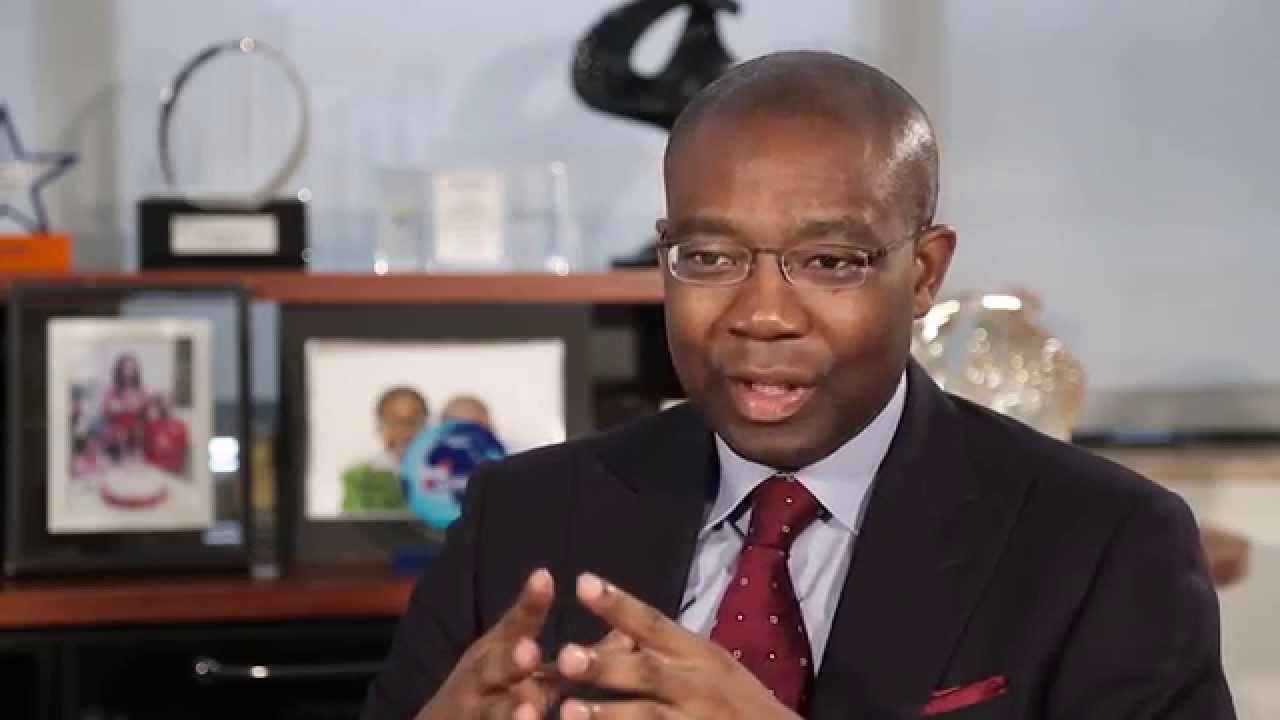
Nigeria's Owodunni makes history, becomes first black to be City Councillor in Canada

Nigeria’s Ayo Owodunni has made history in Canada as the first black person to become a City Councillor in Kitchener, London Ontario.


Owodunni won in Ward 5. Owodunni is a Senior Manager at the Black Professionals in Tech Network.

Reacting to this, President Muhammadu Buhari, in a statement, said the record-setting election of the Nigerian, the first ever for a black person highlighted the various initiatives undertaken by him as a consultant, facilitator, and trainer, supporting businesses in their efforts to promote learning and bring diversity, inclusion and cultural understanding in the workplace.

The President urged Nigerians in the Diaspora to always promote the government’s development agenda wherever they lived and ” never be afraid to dream big and never give up on your dreams.”

The President congratulated Owodunni and his spouse, Folake and their two children on this very important election victory.
 By Kazeem Ugbodaga

PM News


U.S. authorities departure of non-emergency staff from Nigeria

The U.S. State Department on Tuesday authorised the departure of non-emergency U.S. government employees and their families from Nigeria due to a heightened risk of terrorist attacks in the country.

The latest travel update comes after the United States and the United Kingdom warned on Sunday of a possible terrorist attack in the capital Abuja, especially aimed at government buildings, places of worship and schools, among other targets.

"The U.S. Embassy Abuja continues to have limited ability to provide emergency assistance to U.S. citizens in Nigeria," the State Department said.

Nigeria's Department of State Services said the United States had previously issued similar warnings and urged citizens to remain alert.

Insecurity, which is rife across most Nigerian states, is a major issue among voters who will choose a new president next February.

By MacDonald Dzirutwe

Reuters

Related stories: US and UK warn of possible attack in Nigeria's capital

Video - Is Nigeria's security crisis out of control?


Tuesday, October 25, 2022

Nigeria’s Buhari orders formulation of action plan to prevent flood disasters

Nigerian President Muhammadu Buhari has directed relevant government agencies to develop an action plan for the prevention of flood disasters in the West African country.

According to the president’s spokesperson, Garba Shehu, Buhari directed the Minister of Water Resources to lead and coordinate with the Ministries of Environment and Transportation as well as State Governments to develop a comprehensive plan of action for preventing flood disasters in Nigeria.

Nigeria has been hit by perennial floods that caused the loss of hundreds of lives and massive destruction of property.

Currently, more than 2.5 million people in the country are in need of humanitarian assistance, according to the United Nations.

Flooding has affected 34 out of the 36 states in the country this year, killing more than 600 people and displacing 1.3 million people.

The UN says the country has recorded a rise in cases of diarrhoea and water-borne diseases, respiratory infection, and skin diseases.

Shehu noted that President Buhari is regularly receiving updates on the flooding situation and is committed to addressing the challenges caused by the disaster in the country.

By Jerry Omondi

CGTN 

Related stories: Video - Nigeria floods cause food, fuel shortages for over a million people

Video - Aid workers struggling to reach victims of floods in Nigeria


Over 10,000 doctors left Nigeria for UK in last 7 yrs

The Kaduna State Chapter of Nigerian Medical Association, NMA, yesterday said no fewer than 10,000 doctors left Nigeria for the United Kingdom, UK, for greener pastures in the last seven years, saying Doctors in Kaduna State are the least remunerated.

The NMA while celebrating its ‘2022 Physicians’ Week’ lamented continued brain drain in the medical profession in the last seven years, amidst deadly deceases in the country that required more medical doctors.

At a news briefing as part of activities to mark the ‘Physicians’ Week’, the Chairman, Kaduna State NMA, Dr. Madaki Sheyin, said a Nigerian doctor is poorly paid, over worked, lacked necessary work tools and has become a target for kidnappers.

“Nigerian doctors have been rendered unimportant by successive governments for inadequate attention to the heath sector.

The one week medical activities has the theme, “Nigeria’s Healthcare Delivery System and The 2023 Democratic Transition: A Time To Change The Narrative’, is in tandem with the most important upcoming event in Nigeria while the sub-themes’, Mitigating The Impact Of Brain Drain On The Dwindling Human Resource For Health In Nigeria and Health Sector Reforms In The Face Of Emerging Public Health Threats’, were chosen as continued reminder to our governments that things are falling apart in the health sector.

“The issue of progressive depletion of human resource for health cannot be over emphasized. With the recent article from an Online Newspaper of 9th October 2022 titled “200 Nigerian Doctors Move to UK in One Month’, the fact that checks on the website of the General Medical Council, GMC, the body which licenses and maintains the official register of medical practitioners in the UK, showed that the GMC licensed at least 200 Nigerian-trained doctors between August 31, 2022, and September 30, 2022 was revealed.

“The statistics also showed that between January 1, 2022 and September 30, 2022, about 1,307 doctors trained in Nigeria were licensed in the UK as Nigeria continues to battle one of the worst situations of brain drain in its history. Overall, 10,296 doctors who obtained their degrees in Nigeria currently practice in the UK.

“Dispersion of the emigration data for Nigeria trained doctors to UK is as follows: 233 in 2015, 279 in 2016, 475 in 2017, 852 in 2018, 1,347 in 2019, 833 in 2020 in spite of COVID Pandemic and 932 in 2021 during recovery from COVID.

“The Kaduna Doctor is even worse hit by this poor welfare conditions, doctors in the State’s employ as at today receive only 60 percent of the CONMESS salary scale, a far cry from what those in the Federal and other States are receiving. We call on our Governments to quickly declare emergency action in Nigeria’s health sector for the sake of her citizens”.

“This alongside insecurity is largely responsible for the high turnover of doctors in the state and mass exodus causing both internal and external brain drain”.

The doctors therefore appealed to Kaduna state government to immediately implement the report of the Committee on Review of Medical Doctors and other health workers’ salaries in Kaduna State and also domesticate the newly approved hazard allowance for doctors.

By Ibrahim Hassan-Wuyo

Vanguard 

Related story: Frustrated Nigerians 'flee' abroad in punishing pre-election brain drain

Nigeria suffering from medical brain drain

Nigeria orders final seizure of houses, cars of former oil minister

 A Nigerian court has ordered a final seizure of two properties and cars owned by former oil minister Diezani Alison-Madueke, the country's economic crimes commission said on Monday, in the latest ruling related to graft allegations against her.

Alison-Madueke was a key figure in the administration of former President Goodluck Jonathan who served as petroleum minister from 2010 to 2015. She has been dogged by corruption allegations since she left office but denies the charges.

The Economic and Financial Crimes Commission (EFCC) said in a statement that High Court Judge Mobolaji Olajuwon issued the final forfeiture of the former minister's $3 million homes and cars in Abuja.

Alison-Madueke's whereabouts are unclear, but she was last known to be in Britain.

A court has previously ordered the seizure of her upmarket property in the commercial capital Lagos and frozen funds that were said to be part of the rent collected from the property.

In 2017, the U.S. Justice Department filed a civil complaint aimed at recovering about $144 million in assets allegedly obtained through bribes to the former minister.

By MacDonald Dzirutwe

Reuters 

Related stories: $21 million seized from Nigeria's former oil minister Alison Madueke

$37.5 million luxury apartment complex seized from Nigeria's ex-oil minister


Monday, October 24, 2022

Video - Nigeria’s ponmo cuisine under threat as the leather sector seeks growth


The Nigerian government is looking to expand its leather export sector which brings in 500 million U.S. dollars annually as it diversifies its economy away from oil and gas. But the plan is a threat to a local delicacy from the cooked cow skin popularly known as “ponmo”.

CGTN 

Related story: Nigeria to ban consumption of cow skin ‘ponmo’ for lacking nutritional value


US and UK warn of possible attack in Nigeria's capital

The United States and Britain on Sunday warned of a possible terrorist attack in Nigeria's federal capital Abuja, especially aimed at government buildings, places of worship and schools, among other targets.

Nigeria is fighting an Islamist insurgency mainly in the northeast, but in July the Islamic State claimed responsibility for a raid on a prison in Abuja, which freed around 440 inmates, raising fears that insurgents were venturing from their enclaves.

The U.S. Embassy in Nigeria said "there is an elevated risk of terror attacks in Nigeria, specifically Abuja" and added that shopping malls, law enforcement facilities and international organisations were among places at risk.

"The U.S. Embassy will offer reduced services until further notice," the embassy said in an alert to citizens in Nigeria.

The United Kingdom government warned that its citizens in Nigeria should stay alert due to an "increased threat of terrorist attack in Abuja."

"Attacks could be indiscriminate and could affect western interests, as well as places visited by tourists," it said.

Insecurity, which has spread across Nigeria, is a major issue for voters when they go to the polls next February to elect a new president to succeed President Muhammadu Buhari.

Nigeria's foreign affairs ministry was not immediately available to comment.

By MacDonald Dzirutwe

Reuters

Related stories: Video - Is Nigeria's security crisis out of control?

Video - Older people often an invisible casualty in conflict with Boko Haram in Nigeria


Friday, October 21, 2022

Video - Nigeria floods cause food, fuel shortages for over a million people


In Nigeria’s oil-rich Bayelsa state, nearly one and a half million people have been affected by severe flooding. The government is promising emergency supplies to deal with severe shortages of food and fuel. Ahmed Idris reports from Yenagoa.

Al Jazeera 

Related stories: Nigeria's flooding spreads to the Delta, upending lives and livelihoods

Video - Aid workers struggling to reach victims of floods in Nigeria


Nigeria LNG still producing, exporting despite force majeure

Nigeria LNG is still producing and exporting liquefied natural gas despite a force majeure declaration made due to heavy flooding, a spokesperson told local television channel Arise TV on Thursday.

The company made the legal declaration earlier this week amid the worst flooding in 12 years, saying all of its upstream gas suppliers had declared force majeure.

Sources told Reuters this week that no cargoes had yet been cancelled, and that the force majeure was pre-emptive in case the flooding continued for much longer and did impact loadings.

NLNG spokesperson Andy Odeh said that while the company was still operating, it was "not getting enough gas" due to the impact of the flooding on its suppliers.

He said NLNG would work to protect facilities from future flooding, which he said was worse than usual due in part to climate change.

Authorities blamed the flooding, which affected 33 of Nigeria's 36 states, on unusually heavy rain, joined with the release of water from a dam in Cameroon.

Portugal relies heavily on NLNG gas and oil major Shell, NLNG's largest single offtaker, are at most risk from the outage, according to investment bank Jefferies. 

By Libby George

Reuters

Related story: Nigeria LNG declares force majeure as flooding disrupts gas supply

Nigeria's Fact-checkers Arm Citizens With Truth Ahead of Elections

With Nigeria's election campaigns in full swing ahead of February's vote, fact-checkers in the country say they are working together to counter cases of disinformation.

For journalist Opeyemi Kehinde, the first task each day is searching the internet, television programs and social media for any information that may need a second look. If he spots anything dubious, Kehinde posts it to the messaging platform Slack, so that he and other fact-checkers can verify the information.

Kehinde heads FactCheckHub, an Abuja-based organization that is one of eight members of a wider fact-checking initiative known as the Nigerian Fact Checkers Coalition.

Together, they combine resources and expertise to help tackle misinformation ahead of Nigeria's general election.

The Nigerian Fact Checkers Coalition started four months ago.

"Since the advent of various social media platforms and internet access, a lot of people have access to much more information than a decade or two ago," Kehinde said. "We felt as this election is coming up soon, there's need for more advocacy, media literacy, fact-checking of information released by politicians, stakeholders in the elections, as well as the Nigerian populace."

The Nigerian Fact Checkers Coalition holds weekly meetings and publishes its findings through the members' respective newsrooms.

In August, the coalition published an open letter urging politicians not to use misinformation and falsehoods, and to ensure that information disseminated during campaigns is accurate and fair.

Last month, the group hosted politicians, security agents, independent electoral bodies and civil society groups at a conference to discuss the impact of falsehoods.

Kehinde said the group is seeing some successes, but is experiencing pushback, too.

"We have some politicians who are now setting up media teams to attack fact-checks that are published by members of the coalition, to provide alternative facts to some of our evidence-based reports, based on their misleading claims," he said.

Public opinion in the country is often shaped by ethnic and religious backgrounds, especially during elections. And with a population of over 200 million, the ratio of fact-checkers to citizens in Nigeria is very low.

Abuja-based communications expert Pamela Braide said spreading falsehoods can have serious implications.

"Communications and politics go hand in hand, misinformation is part of it. What it does is it increases people's mistrust, it [damages] relationships of the people, communities, and it often leads to violence before it is verified," Braide said.

But by combining their efforts, members of the fact-checking coalition can quickly counter false information.

Kemi Busari, coalition member and editor at verification website Dubawa, explained how the coalition sprang into action when it spotted a viral video about a politician.

The fact-checkers found the video had been manipulated in an attempt to mislead voters into thinking the politician supported a member of the opposition party.

"We did the fact-check and we realized that some guys just decided to extract some part of it," Busari said. "The video was shared in the group and we did the fact-check and all of us published it, and that increased the scale or audience of the fact-check. It's best we come together. We can co-publish our fact-checks; we can co-author fact-checks."

Busari said the coalition is just getting started.

"We're also looking at several partnerships with embassies, Google, and some other organizations. Particularly we're seeking partnership with organizations who could help with live fact-checking. We want to be engaged in live fact-checking of every [one] of these conversations," he said.

As election campaigns and rallies gather pace across Nigeria, the fact-check coalition may have a large task ahead.

By Timothy Obiezu

VOA 

Related story: Video - Presidential hopeful Peter Obi on his plans for Nigeria


At least 23 killed in Nigeria after herdsmen attack villagers

Clashes between herdsmen and farmers in the Nigerian state of Benue left at least 23 people dead, a local official said on Thursday, the latest deadly incident fuelled by growing pressure on land resources in Africa's most populous country.

Violence between farmers and pastoralists has become increasingly common in recent years as population growth leads to an expansion of the area dedicated to farming, leaving less land available for open grazing by nomads' herds of cattle.

Kertyo Tyounbur, chairman of the Ukum local government area of Benue where the violence took place, gave a death toll of 23.

Local resident William Samson said the trouble started on Tuesday when villagers killed two herders and stole their cattle. This was followed by a reprisal attack by herdsmen on Wednesday on the village of Gbeji, he said.

Reuters could not verify his account from other sources in the remote rural area.

Benue is one of Nigeria's Middle Belt states, where the majority Muslim North meets the predominantly Christian South.

Competition over land use is particularly intractable in the Middle Belt as the fault lines between farmers and herders often overlap with ethnic and religious divisions.

The Boko Haram insurgency in the northeast has worsened the problem by driving herders into the Middle Belt and further south, analysts say, while climate change and increasing aridity in the North are also contributing factors.

By Chijioke Ohuocha

Reuters

Related stories: Conflict between Herdsmen and farmers in Nigeria escalates

Mass burial in Nigeria for 73 killed in violence between herdsmen and farmers

Pastoralist attack survivors unsettled in Nigeria

Thursday, October 20, 2022

Two years after #EndSARS, police brutality in Nigeria goes on

Theophilus Blamoh and two of his friends were walking to buy items for their dinner in the central Nigerian city of Ilorin on the evening of September 6, when a black pick-up truck stopped beside them. One door opened and someone shouted at them to enter. It was a policeman.

When they didn’t reply, two policemen jumped out and cocked their guns. The trio, now scared, entered. Just before the vehicle drove on, a policeman recognised one of the young men as a fellow church member and let him go before driving off to the nearby police station.

“They searched our phones but they didn’t find anything incriminating,” Blamoh, a 23-year-old performing arts undergraduate at the University of Ilorin told Al Jazeera. “They checked my account balance and found I had just withdrawn my last 1,000 naira.”

One officer asked why they were not Yahoo-Yahoo boys [internet fraudsters], ostensibly so there could’ve been more money for the taking. When Blamoh asked why a police officer would ask that, they started hitting him with the butts of their guns.
 

#EndSARS

Stories of police brutality are rampant in Nigeria, Africa’s largest democracy. Two-thirds of its estimated 200 million people are below the age of 30 and many, like Blamoh, say they have either had a personal experience with the police or know someone who has.

As decades of torture, maiming and killing by the country’s security forces stacked up, young people across the country took to the streets for days, beginning on October 8, 2020.

The target of their anger was the Special Anti-Robbery Squad (SARS), a rogue police unit accused of extrajudicial killings, extortion and kidnapping among other nefarious crimes.

Called #EndSARS, the protests ballooned into a massive call for the abolition of the squad. It flickered out on October 20 that year after soldiers opened fire on unarmed protesters at a popular landmark – the Lekki tollgates – in the commercial capital Lagos.

At least 12 people died and hundreds of others were wounded, according to Amnesty International. A leaked report by a panel of inquiry launched by the Lagos state government found the Nigerian military culpable but the authorities rejected the report.

Two years on, experts and activists say justice has not been served and brutality by security agencies has continued, mostly away from the public eye.

On October 11, 2020, the Nigerian government announced the disbandment of SARS. But, citizens say, SARS officers are still in service as plainclothes policemen patrolling the streets, extorting, arresting and torturing citizens without reason.

Between January and September last year, there were 164 recorded extrajudicial killings by law enforcement agents according to Global Rights, a Washington, DC-based human rights group. This October 4, Dave Umahi, governor of Ebonyi in the southeast, reportedly marshalled soldiers to flog civil servants for coming late to work.
 

‘Justice is elusive’

Rinu Oduala, a Lagos-based activist who was vocal during the 2020 protests, said the Nigerian government is yet to actualise real police reforms. That makes young people “afraid to step out of their homes, in a bid to not become victims of torture, extortion, harassment and extrajudicial killings”, she said.

Moreover, many families of the victims are yet to receive compensation or justice, including those who died at the Lekki tollgates, said Osai Ojigho, country director of Amnesty International in Nigeria.

“Justice is still elusive and more so where representatives of the government continue to dispute the number of dead and injured people at the Lekki tollgate shooting,” she told Al Jazeera.

“This is very disappointing…the lack of punishment for erring police officers sends a message to young people that their lives do not matter,” Ojigho added.
 

‘A change in psyche’

The status quo has led to conflicting opinions – online and offline – about the success of the #EndSARS protests.

Kikelomo Shodeko, a senior analyst at Horizon West Africa, an Abuja-based security consultancy firm, said the demonstrations were a turning point.

“What it has brought about is a change in psyche,” she said. “It helped young people recognise their capacity to organise not only protests but also politically,” she said.

This change may influence political attitudes as the country heads towards general elections next February. In August, the country’s electoral commission announced that 10.5 million new voters had been registered, 84 percent are aged 34 and below.

A number of these youths seem to have been galvanized to vote by the emergence of Peter Obi, a former two-term governor of the southeastern state of Anambra, as a third option to the septuagenarian presidential candidates of the ruling party and leading opposition.

Obi, 61, is perceived as a breath of fresh air and analysts say this is because young people find him relatable and are desperate for change.

Ridwan Oke, a Lagos lawyer, is determined to vote against any contestant in 2023 with “no genuine commitment to ending police brutality”.

He was beaten by policemen outside his house in the Lagos suburb of Ebute Meta in July when he told them to stop driving against the flow of traffic.

Oduala concurs.

“If young people are not taking the upcoming elections seriously, then how do they plan to answer those who shot their colleagues in 2020 and gaslighted them after?” she asked.
 

‘Erosion of public confidence’

Unchecked police brutality is an existential danger to young people who live in fear as the relationship between the people and security agencies deteriorates, activists say.

“[T]he morale of young people is constantly dampened, seeing that errant officers have not been brought to book,” Oduala said. “Citizen-police hostility has also been on the increase, where citizens are attacking police officers perceived to be a force of oppression.”

“The danger of continued police brutality in Nigeria is an erosion of public confidence in the force responsible for keeping them safe,” said Ojigho. “[T]he police are the most distrusted security agency in Nigeria.”

Analysts say the government must be ready to acknowledge the problem, enforce punishments, educate officers and tackle corruption within the police.

“What we have are officers that are mostly uneducated and are given guns,” Shodeko said. “They should attend training in crisis, risk and emergency management. That training in itself is critical to how the police handle situations and understand their roles.”

As citizens mark the two-year anniversary of the #EndSARS protests, some say it may be too late given a lack of political willpower to effect change.

“I fought and spoke against police brutality for months only to become a victim almost two years later because the government refused to listen to us,” said Oke who was a legal volunteer helping detained protesters in October 2020.

Blamoh, who was locked up in a cell for four days, said two officers drove him to his hostel when he became extremely weak and dumped him at the gates. A hostel porter who saw them came and rushed him to the hospital.

“That action made me know that I should be running away from them instead of running to them,” Blamoh said.

By Pelumi Salako

Al Jazeera 

Related stories: Gone: The lost victims of Nigeria’s ‘most brutal’ police station

Why Nigeria's anti-police brutality protests have gone global

Nigeria's flooding spreads to the Delta, upending lives and livelihoods

People wade through fast-flowing water, holding one another to avoid being swept away, balancing suitcases, clothing and food on their heads.

The torrent was, until recently, the East-West Road in Nigeria's Rivers state, the gateway to the nation's oil and gas.

Now parts of Rivers, along with large swathes of 32 other states, are inundated by the worst flooding in 12 years.

"We cannot access Ahoada West anymore," local government chairman Hope Ikiriko said of the area he represents. He said 30 boats were helping to move people to camps built to accommodate the area's 150,000 displaced.

"We are going to rescue people who hitherto never wanted to quit," he added.

Nigerian authorities said Rivers, Anambra, Delta, Cross River and Bayelsa states remain at risk of flooding until the end of November.

The flooding has killed more than 600 people, displaced around 1.4 million and damaged or destroyed 440,000 hectares of farmland. Health officials warn it could worsen an ongoing cholera outbreak, and even natural gas exports are at risk.

Authorities blame heavy rains and a water release from the Lagdo dam in Cameroon. Experts say global warming, and poor planning, worsened the disaster.

"Climate change is playing a big role in this," said Hiba Baroud, associate professor of civil and environmental engineering at Vanderbilt University. "But the other component is...the vulnerability of the infrastructure. This is how we end up in a disaster like this one."

The 2021 Notre Dame Global Adaptation Index ranked Nigeria among the bottom 20 nations in its readiness to adapt to climate change.

Baroud said a Nigerian dam meant to backstop Cameroon's Lagdo was planned, but never completed. A lack of zoning allows houses in flood zones and poor irrigation places farmers at the edge of rivers that can inundate their fields.

"It's going to have cascading effects on diseases, on food security and so on," Baroud said.

By Angela Ukomadu

Reuters

Related stories: Video - Aid workers struggling to reach victims of floods in Nigeria

Video - Nigeria floods: Thousands of displaced people in need of help

Wednesday, October 19, 2022

Dangote sets 10-yr manufacturing target for Nigeria’s industrialisation

Group, Alh. Aliko Dangote, has outlined the targets that Nigeria’s manufacturing sector needs to meet to ensure the nation’s industrialisation in the next 10 years.


To promote industrialisation in the country, he said that the manufacturing sector’s contribution to gross domestic product (GDP) should be more than double to 20 percent, up from the current 9 percent, among others, within the next decade.

Dangote spoke yesterday, in Lagos, at the 2nd Adekola Odutola Lecture organised by the Manufacturers Association of Nigeria (MAN) in commemoration of its 50th Annual General Meeting.

He stated: “Nigeria needs to, henceforth, intensify efforts at promoting industrialization with specific focus on the attainment of the following targets in the next 10 years:

“15% manufacturing sector growth, 20% manufacturing contribution to GDP, 15% growth in export of manufactured products, 10% increase in the share of manufacturing to total export merchandize, stronger inter-industry linkage between SMEs and large corporations, improved manufacturing contribution to government tax revenue and 20% increase in manufacturing employment.”

Dangote noted that industrialisation facilitates the global competitiveness of a nation in the production of processed and manufactured goods by linking industrial activity with primary sector, domestic and foreign trade, and service activities.

His words: “To achieve industrialisation goals, it is necessary for a nation to formulate plans and policies that will enhance and sustain industrial development. Sustainable industrial development involves establishment of a conducive environment to encourage investment and ensure efficient usage of resources to increase productivity and growth of the nation.

“The creation of a pathway to steady and sustained industrial growth entails the deployment of industrialization centric strategies and policies; promotion of the National Manufacturing Philosophy; securing the buy-in of government for successful implementation of the agenda; promotion of smart manufacturing; the establishment of a robust framework aimed at improving the business environment, the extension of comprehensive and integrated support to priority sectors with strong linkages and growth potentials as espoused in the NDP 2021-2025 with particular emphasis on improved value addition and export of manufactured products. It also entails the development of strong partnership with the private sector within and outside the country.”

By Yinka Kolawole

Vanguard

Related stories: Video - Aljazeera speaks with Africa's richest man Aliko Dangote

Dangote oil refinery to help solve fuel shortage in Nigeria


Direct flights between Nigeria and Israel might be coming soon

Starting next month, Israelis might be able to travel to a new destination in Africa directly from Ben-Gurion Airport.

Nigerian airline Air Peace could start offering direct flights between Nigeria and Israel very soon, CEO Allen Onyema revealed this week in a meeting with the Israeli envoy to Nigeria.

The launch of the new flight route between Lagos and Tel Aviv, while not officially confirmed as of yet, could come as early as next month.

New potential line good news for Nigerian Christians

The 4,300 km. route would see the flight time between the two countries decrease significantly to only six hours. Currently, the travel can often include several transfers and usually takes longer than 10 hours.


The potential line is especially significant for many Nigerian Christians who wish to travel to Israel for its holy sites.

The Jerusalem Post

Related story: Ethiopian Airlines Announced As Partner For Nigeria Air


Frustrated Nigerians 'flee' abroad in punishing pre-election brain drain

 Nnamdi Nwaogu, a 44-year-old IT worker, has packed his bags. In Lagos, Nigeria's frenetic commercial capital, galloping inflation and a plunging naira have pummeled his salary.

Nwaogu, like hundreds of other Nigerians, left amid a brain drain that is punishing even for a nation used to losing its young and educated.

"We have serious doubts if this is the time for that hope to blossom," he said before flying to the UK last month.

Nwaogu began a master's degree in England, while his wife, a doctor, will join him in January with their three children.

Departing workers are impacting nearly every sector, stretching a weak healthcare system, forcing employers to recruit on a continuous basis and worsening services from banking to tech.

The phenomenon -- dubbed "japa," meaning "to flee" in Yoruba -- regularly trends on social media. Many cite unprecedented nationwide insecurity, inflation at a 17-year-high and a loss of faith in leaders before the February 2023 presidential election.

"We are witnessing an epidemic of brain drain," said Dr Dare Godiya Ishaya, president of the Nigerian Association of Resident Doctors (NARD).

Ishaya said comparatively low pay, workplace assaults and lack of safety – 20 NARD members have been kidnapped this year -- were all reasons members left.

A NARD poll showed that nearly 800 resident doctors had left this year, while 85% of its leadership were planning to leave. The result is hours-long waits at hospitals, he said, doctor burnout and deteriorating care.

Real-time nationwide statistics on those leaving are not available. But British government data showed a 300% increase in Nigerians getting UK work visas in the year to June, to 15,772.

Others are going to Canada, Australia and the United States.

The exodus lead a banking industry group to release a study last month on ways to retain workers, while tech firms such as Yellow Card Financial, a cryptocurrency exchange, told Reuters they had started offering stock options and pay in dollars.

"The competition for talent is only going to get more and more intense," said Yellow Card chief executive Chris Maurice.

The pull from countries grappling with their own worker shortages is aiding the exodus.

One Nigerian accountant who moved to the UK in May said it took her just three months to get offers from two of the Big Four accounting firms; her company, she said, recently doubled its referral fee to 1,000.

Lagos-based consultancy SBM warned that the loss of skilled labour was bound to have a negative economic impact.

For Nwaogu, there is no choice.

"I want to be able to give my children a better quality of life," he said. "I can't get that here."

By Libby George

Reuters

Related stories: Nigeria suffering from medical brain drain

Middle-Class Emigration affecting skill shortage in Nigeria

Video - Low wages, and lack of infrastructure leading to a "brain drain" in Nigeria's IT sector

Gunmen abduct at least 10 hospital workers in Nigeria's Niger state

Gunmen have abducted at least 10 healthcare workers in Nigeria's Niger state and killed an unspecified number after bandits invaded a general hospital early on Tuesday, a hospital and military source said.

Armed bandits operating for cash have kidnapped or killed hundreds across northwest Nigeria. Niger state officials have said that Islamist militant group Boko Haram had taken over multiple communities in the state, offering villagers money and incorporating them in their ranks to fight the government.

The hospital source said more than 20 staff were kidnapped, including patient relatives, while the security source said two people had been killed after the gunmen invaded the general hospital in Lapai local government in large numbers.

Niger state governor, Sani Bello said a number of people were killed during Tuesday's attack at Gulu General Hospital and unspecified number abducted including medical workers. He did not specify how many had been killed.

Separately, Dr Dare Godiya Ishaya, president of the Nigerian Association of Resident Doctors (NARD), told Reuters that 20 NARD members have been kidnapped this year, causing some of them to leave the country partly due to a lack of safety. 

By Chijioke Ohuocha 

Reuters

Related stories: Nigeria pays $11 million as ransom to kidnappers in four years

Video - Freed schoolboys arrive in Nigeria’s Katsina week after abduction


Tuesday, October 18, 2022

Nigerian Authorities Defend Decision to Burn Vessel Carrying Allegedly Stolen Oil

 Nigeria's defense chief defended the destruction of a seized ship that was smuggling stolen oil, saying no investigation was needed. Critics say the military's burning of the ship last week destroyed vital evidence and accused the military of a cover-up.

Nigeria's chief of defense staff, General Lucky Irabor, spoke after last Friday's national security meeting with the president.

Irabor said the swift response of security operatives followed the rules of engagement and that they didn't need to carry out any investigation because the ship was caught in the act.

Security operatives last week seized and burned an 87-meter-long vessel allegedly carrying 650,000 liters of crude oil in southern Delta state. The vessel had seven crew members aboard.

The bust was one of the biggest in recent weeks led by a former Delta state militant, Government Ekpemupolo, widely known as Tompolo. Nigerian authorities in August awarded him a multi-billion-dollar surveillance contract in a desperate bid to address rampant oil theft.

On Sunday, popular human rights lawyer Femi Falana called for the removal of the defense chief. Human rights lawyer Marshall Abubakar said he agrees and said the burning of the ship is highly suspicious.

"Why the hurry in destroying this vessel?” Abubakar said. “There have been allegations that the menace of oil theft is being perpetrated by persons in authority. The hurried destruction lays credence to that particular allegation."

Experts say Nigeria has been losing thousands of barrels and millions of dollars every day to crude oil theft.

The ex-militant's company has so far uncovered 58 instances of oil being siphoned from pipelines, including one connected to Nigeria's major export line where oil was tapped unnoticed for nine years.

Tompolo has also alleged that security operatives, oil companies and local residents usually collude to steal oil. Last week, lawmakers promised to investigate the matter and make public their findings.

Abuja-based lawyer and economist Eze Onyekpere said the burning of the ship will make any investigation more difficult.

"When you apprehend an offender, you'll need evidence to be able to prove before a court of law that such a person committed the offense in question,” Onyekpere said. “The vessel on which the crude oil is being carried is one of those pieces of evidence that you'll need to bring before a court of law."

Abubakar also worries about environmental damage.

"The destruction of this vessel in open space without appropriate paraphernalia to protect the ozone layer is an injustice the struggles and environmental rights of the Niger Delta people,” Abubakar said.

Critics are waiting for answers and monitoring what authorities do next.

By Timothy Obiezu 

Related stories: Shell investigates in Nigeria after report of nine-year oil theft

Nigerian Authorities Launch App to Monitor Crude Oil Theft

Nigeria LNG declares force majeure as flooding disrupts gas supply

Nigeria LNG has declared force majeure because of widespread flooding that has disrupted supply, a spokesman for the company said on Monday.

The declaration could worsen Nigeria's cash crunch and will curtail global gas supply as Europe and others struggle to replace Russian exports due to the invasion of Ukraine in February.

NLNG said all of its upstream gas suppliers had declared force majeure, forcing it to make the declaration as well.

"The notice by the gas suppliers was a result of high floodwater levels in their operational areas, leading to a shut-in of gas production which has caused significant disruption of gas supply to NLNG," spokesperson Andy Odeh said.

Odeh said NLNG was determining the extent of the disruption and would try to mitigate the impact of the force majeure.

Flooding in Nigeria has killed more than 600 people, displaced 1.4 million and destroyed roads and farmland. Officials have warned that the flooding, caused by unusually heavy rains and the release of water from a dam in Cameroon, could continue into November.

NLNG's supply had already been limited due to prolific oil theft that has slashed output from what is typically Africa's largest exporter. NLNG had exported roughly 18 cargoes in September, according to Refinitiv data.

Nigeria relies on fossil fuel exports for 90% of its foreign exchange and roughly half its budget. Crude oil exports fell below 1 million barrels per day (bpd) on average in August, the lowest level since the 1980s, due to theft that has exceeded 80% on certain pipelines.

Crushing fuel subsidy costs have also kept Africa's most populous nation from benefiting from this year's surge in oil prices. 

By Libby George

Reuters

Related stories: Video - Aid workers struggling to reach victims of floods in Nigeria

Video - Nigeria floods: Thousands of displaced people in need of help

Monday, October 17, 2022

Video - Aid workers struggling to reach victims of floods in Nigeria


Aid workers in Nigeria are struggling to reach hundreds of thousands of people displaced by floods. Floodwaters have hit the country’s oil-producing region in the south, after devastating northern, central and eastern parts of the country. Al Jazeera’s Ahmed Idris reports from Atani, one of the worst-hit areas in southern Nigeria.

Al Jazeera 

Related stories: Video - Nigeria floods: Thousands of displaced people in need of help

Video - Nigeria floods displace at least 600,000 people


Nigerian Authorities Say Separatist Not Free Yet

Nigerian prosecutors say they will appeal a court's decision to drop terrorism charges against separatist leader Nnamdi Kanu. An appeals court dismissed the charges Thursday, saying a lower court had no authority in the case and that Kanu was illegally extradited from Kenya. Kanu leads the Indigenous People of Biafra (IPOB), a group that wants to break away from Nigeria the government has labeled a terrorist organization.


Nigeria’s attorney general, Abubakar Malami, responded to Thursday's ruling in a statement saying the separatist is discharged but not acquitted.

Malami said authorities will explore legal steps to revisit the court's decision. He said the court failed to take into account issues that took place before Nnamdi Kanu was extradited to Nigeria from Kenya last year.

A three-judge panel of an appeals court Thursday ruled that Kanu’s trial was unlawful, and said authorities flouted international treaties to "abduct" the separatist.

The court said the circumstances surrounding his arrest did not give the government the jurisdiction to continue to keep him on trial.

The court also ruled that the government did not provide clear evidence of when and where Kanu committed the many allegations against him.

The attorney general's office did not immediately respond to calls for further comment. But Kanu's lawyer, Ifanyi Ejiofor, spoke to VOA via phone.

"The right of appeal is a constitutional right but the fact is that order of court must be obeyed, it's sacrosanct. Saying that Nnamdi Kanu was discharged not acquitted I believe is an impudence on the judgement of the court of appeals. The court used the word abduction, that is to tell you the level of the atrocity they committed," he said.

It's not clear when he will be freed.

"We expect them to comply immediately with the court order because detention became illegal as of yesterday. Yesterday, the court directed he should be released immediately. They should release him to us without any further ado," Ejiofor said.

Kanu is leading a movement to break off southeastern Nigeria from the rest of the country to form a republic called Biafra.

A previous Biafra independence movement led to a civil war between 1967 and 1970 that killed an estimated one million people.

On Friday, as news of Kanu's court discharge spread, so did excitement in Nigeria's Southwest region.

Christian Paul hails from Imo state, one of the strong bases for the separatist movement. He believes that with Kanu’s release, the court may have been sending a message.

"They violated his human rights and kept making fresh allegations against him. At this point in time, it becomes really strategic if his release is granted by a court. It might have some political undertone,” he said.

Nigerian voters head to the polls in February of next year to elect a new leader.

By Timothy Obiezu

VOA

Related stories: Nigerian separatist leader acquitted of terrorism charges

UK government faces court challenge in Nigerian rendition case


Nigeria's Zamfara state orders media to close for covering political rally

Zamfara state in northwestern Nigeria ordered five media outlets to close on Sunday after they covered a political rally for the opposition People's Democratic Party (PDP), which took place in violation of a state ban on political activities.

The order to close came after Governor Bello Muhammad, a member of the ruling All Progressives Congress, banned political activities, including meetings at individuals' homes, on October 13 due to the security situation in the state.

The ban includes campaigning for February 2023 presidential elections, which began nationwide last month.

Zamfara state, along with much of northwestern Nigeria, is battling armed groups of 'bandits' who have kidnapped thousands for ransom, killed hundreds and made many roads impassable and some farming impossible.

"Zamfara State Commissioner of Police has been directed to enforce full compliance and arrest of any staff of these media organizations... performing any duties in violation of the shut down," said a statement from the state security council released on Sunday.

The statement named five outlets, Pride FM Radio Gusau, NTA Gusau, Amji TV Gusau, Gamji TV Gusau and Alumma TV Gusau. It did not specify why they had been ordered "shut down", but state information commissioner Ibrahim Magaji Dosara told the BBC Hausa that it was because they covered PDP activities held in violation of the state government's order.

Zamfara's political activity ban came alongside other measures, including restricting movement in some local areas and shutting down several roads.

The statement directed security officials to "deal ruthlessly" with anyone found violating the orders. 

By Garba Muhammad

Reuters


Friday, October 14, 2022

Video - Nigeria floods: Thousands of displaced people in need of help


Severe flooding in Nigeria is making people increasingly desperate. Hundreds of thousands of people in several communities are out of reach, and many families are waiting for news of their loved ones. Al Jazeera's Ahmed Idris reports from Otuocha, Nigeria.

Al Jazeera 

Related stories: Death toll in Nigeria boat capsize tragedy rises to 76

50 killed and many displaced in northern Nigeria flooding


Video - Nigeria floods displace at least 600,000 people


Flooding in Nigeria’s Anambra state this year has displaced nearly 600,000 people. An additional 500 people have died. Nigeria's national emergency management agency says increased rainfall and the release of excess water from a dam in neighboring Cameroon have contributed to flooding in Nigeria.

CGTN 

Related stories: Video - Nigeria floods kills more than 300 and submerges homes, roads

In Nigeria's food basket state, floods wash away homes, crops and hope


‘Nigeria to house world’s poorest people by 2030′

 A professor of economic policy at the Blavatnik School of Government, University of Oxford, Stefan Dercon, has revealed that by 2030, extreme poverty would be an African phenomenon, as the greatest number of the world’s poor would reside in Nigeria.

He said this comes as countries such as China and India have successfully grown their economies and reduced their poverty level significantly.

Dercon stated this during an in-conversation hosted by the Aig-Imoukhuede Foundation. Dercon, who is the author of “Gambling on Development: Why Some Countries Win and Others Lose,” argued that the answer to a nation’s development lies not in a specific set of policies but in the key ‘development bargain.’

He said this is where the elite shift from protecting their positions to gambling on a growth-based future.

The professor said in some countries, the elites have made successful bargains that have resulted in positive developmental outcomes. He said in Nigeria, no such bargain exists adding that socio-economic outcomes continue to deteriorate.

The Chairman, Aig-Imoukhuede Foundation Leadership Council, Olusegun Obasanjo, stressed that for an elite bargain for development to occur, it is important Nigerians have unity of purpose and a common objective. He said right now, everyone is focused on his or her agenda and as a result, the country is suffering.

Also speaking, the Chairman of the Aig-Imoukhuede Foundation, Aigboje Aig-Imoukhuede, said one of the strategic objectives of the foundation was to build the capacity of the public sector and persuade Nigerian stakeholders to actively participate in national transformation.

“The conversation doesn’t just end here. We are taking this further in a discussion with senior public servants over the next few days and hopefully, sometime in the future. I may be able to confirm that this dialogue catalysed a process that led to positive change in Nigeria,” he said.

Present at the interactive session were presidential aspirant of the Labour Party, Peter Obi; former presidential aspirant, Kingsley Moghalu, Pascal Dozie, Publisher of The Guardian, Lady Maiden Ibru and journalist Kadaira Ahmed, who debated how an elite consensus could be formed in Nigeria.

By Adaku Onyenucheya

The Guardian