Monday, April 3, 2023

Nigeria set to launch in space additional satellites

Nigeria is poised to take a major step in its security and defense capabilities with the launch of additional military satellites. This development will help to enhance the country’s security posture, allowing for greater surveillance and monitoring of potential threats. The satellites will be able to provide Nigeria with detailed images of its land, seas, and airspace, which will aid in the detection of potential security risks. Additionally, the satellites will be able to detect and track the movement of military vessels, aircraft, and other vehicles, allowing for better coordination between military forces.

The Chief of Defence Space Administration, Air Vice Marshall Ayo Jolasinmi, says Nigeria will soon launch Satellites II and III into space, during a visit to the Minister of Defence, Major General Bashir Magashi (retd.), in Abuja, Jolasinmi stated that the orbit was working perfectly and that his service would need the support of the ministry to service its frequency.

A statement by the Special Assistant to the Minister on Media and Publicity, Mohammad Abdulkadri on Friday read, “The Chief of the Defence Space Administration thanked the minister for approving his appointment and ensuring the timely release of intervention funds which he said was cushioning the effects of the minimal budgetary allocation.

“Jolasinmi said the DSA was better positioned to use Space products with the launch of the first satellite while satellites two and three will be launched soon.

The launch of these satellites will also help to improve communications and coordination between military forces. By providing a secure, reliable link between locations, military personnel will be able to receive and share important information in a timely manner. This will improve the effectiveness of their operations and allow for better decision-making in the face of potential threats. Additionally, the satellites will provide a platform for improved communication between ground forces and the Nigerian government, allowing for better coordination of security-related operations.

Furthermore, the satellites will assist in the identification of potential threats by providing real-time information to Nigerian security forces. The satellites will be able to detect suspicious activities and alert the appropriate personnel, allowing for a swift response to potential threats. Additionally, the satellites will be able to provide images of suspected terrorist camps or hideouts, allowing for more effective counter-terrorism operations.

The launch of these satellites will also help to enhance the Nigerian government’s ability to monitor and respond to natural disasters. The satellites will be able to detect and monitor changes in the environment, alerting the appropriate authorities of any potential threats. This will allow for better preparedness and response to natural disasters, ensuring the safety and security of Nigerian citizens.

Finally, the launch of additional military satellites will help to improve Nigeria’s overall security. By providing real-time monitoring and intelligence, the satellites will enable the Nigerian government to respond swiftly to potential threats, while simultaneously enhancing the country’s ability to protect its citizens. With these satellites in place, Nigeria will be able to stand firm against the threat of terrorism and other forms of violence, ensuring the safety and security of its citizens.

This January, the Federal Government of Nigeria inaugurated an integrated satellite called DELSAT-1 to enhance the operational capacity of the Nigerian armed forces against insecurity.

This will assist in realising the nation’s sectoral strategies that respond to identified threats to Nigeria’s national interests, such as the National Defense Policy, National Counter Terrorism Strategy and the National Policy on Public Safety and Security.

China’s 18-story Long March 3B rocket likely launched DELSAT-1 into space from the Xichang launch base in Sichuan province in southwestern China.

Nigeria’s space ambitions began as early as 2002 when the Assistant General Director of Training and Capacity Building at NASRDA made a presentation paper setting out a 28-year roadmap for the research, developing and launching of satellites from Nigeria by 2030.


A few months after the Nigerian Vice-president Professor Yemi Osinbajo signed the Defense Space Administration Bill into law on February 18, 2017, previously passed by the National Assembly, the Nigerian Military commissioned the Defence Space Administration Office Complex and the Foundation Laying of Defence Cyber Operations Centre, at Obasanjo Space Centre, Abuja.

In 2018, the Nigerian Space Research and Development Agency (NASDRA) – the agency in charge of coordinating all Nigerian space activities claims that its constellation of satellites could be the hub for out-of-space monitoring and tracking of aviation globally. The agency believes that it has the capability to locate any airborne plane within and outside Nigeria.

Recent development includes Nigeria and India signing a Memorandum of Understanding (MoU) to cooperate in the exploration of outer space for peaceful purposes.

Both countries agreed to sign a supplemental MoU on partnership in use of geospatial technology between the New Space India Limited (NSIL) under ISRO and the Nigeria Erosion and Watershed Development and Connectivity.

By Ekene Lionel, Military Africa

Related story: Artemis Accords signed by Nigeria and Rwanda


Friday, March 31, 2023

Junior oil minister of Nigeria Timipre Sylva has resigned


Nigeria's Timipre Sylva has resigned as the country's minister of state for petroleum to seek a new term as governor of oil-producing Bayelsa State in the southern Niger Delta, ministry and presidency sources told Reuters on Thursday.

Sylva's resignation comes at a time of political transition in Nigeria, with President Muhammadu Buhari serving his final weeks in office before giving way to President-elect Bola Tinubu on May 29.

Sylva handed his resignation letter last week to Buhari, who doubles as petroleum minister, and stopped coming to the office, said two sources who did not want to be identified.

They said he would be seeking the ruling All Progressives Congress ticket to run for Bayelsa governor in party primaries scheduled to take place on April 14.

Sylva could not be reached for comment and the petroleum ministry declined to comment.

Sylva served as governor of Bayelsa for one full term between 2008 and 2012. At the time, he was a member of the People's Democratic Party, which was then in power at the federal level but is now in opposition.

Appointed junior oil minister in August 2019, Sylva oversaw major reforms in the oil sector, including the passing of legislation that overhauled the sector's fiscal regime in a bid to spur investment.

During his time as minister, Nigeria's oil output fell to its lowest in decades due to crude theft and pipeline vandalism. Angola overtook Nigeria as Africa's biggest oil producer and exporter for a few months last year.

By Camillus Eboh, Reuters

Thursday, March 30, 2023

Fulani terrorists in Nigeria kill Pastor and kidnap wife

Fulani herdsmen killed a pastor last Thursday in Kaduna state, Nigeria, two weeks after terrorists killed a Baptist pastor’s son in the same state, sources said.

The Rev. Musa Mairimi of the Evangelical Church Winning All (ECWA) in Buda 2 village, near Kasuwan Magani in Kajuru County, was killed in his home and his wife kidnapped, said the chairman of the Kaduna state chapter of the Christian Association of Nigeria (CAN), the Rev. Joseph Hayab.

“The herdsmen and terrorists invaded the community on Thursday, March 23, and killed the pastor in his house,” Hayab said. “His wife was taken into captivity at gunpoint.”

Hayab said that more than 100 Christians have been kidnapped in Kaduna state’s Kauru, Jaba, Kachia, Kagarko and Kajuru counties.

“Who will we cry to and who will we run to for help except God?” he said. “Imagine that since the carnage of kidnapping of Christians started in Kaduna state, no arrests have been made.”

Area resident Istifanus Ma’aji requested prayer.

“Let us pray for the safe return of the wife, the pastor, and other Christians taken captive by the herdsmen and bandits,” Ma’aji said.

Pastor’s son killed

In Kaduna state’s Karimbu-Kahugu village, Lere County, terrorists on March 10 broke into the home of Baptist Pastor Dadi Babas at 1 a.m., killed his son and kidnapped his wife and three other family members while the pastor was attending the funeral of this brother in Bauchi state, he said.

Pastor Babas said in a text message that he was informed of the attack at 4 a.m. and that his wife has been released.

“My son was brutally killed by the terrorists, while my wife, my daughter-in-law, who is nursing a baby, and two other members of my family were kidnapped,” he said. “As I send this message, three members of my family remain in captivity with the bandits, while my wife was abandoned by the terrorists because of her illness.”

He said the terrorists are demanding a ransom of 5 million naira ($10,841) for the release of his remaining family members.

Peter Mukaddas, vice chairman of the Kahugu National Development Association, identified the assailants as “Muslim bandits.”

“We are fervently praying to God to touch the hearts of the terrorists so that they can release the Christians,” Mukaddas said in a text message.

Nigeria led the world in Christians killed for their faith in 2022, with 5,014, according to Open Doors’ 2023 World Watch List report. It also led the world in Christians abducted (4,726), sexually assaulted or harassed, forcibly married or physically or mentally abused, and it had the most homes and businesses attacked for faith-based reasons. As in the previous year, Nigeria had the second most church attacks and internally displaced people.

In the 2023 World Watch List of the countries where it is most difficult to be a Christian, Nigeria jumped to sixth place, its highest ranking ever, from No. 7 the previous year.

“Militants from the Fulani, Boko Haram, Islamic State West Africa Province (ISWAP) and others conduct raids on Christian communities, killing, maiming, raping and kidnapping for ransom or sexual slavery,” the WWL report noted. “This year has also seen this violence spill over into the Christian-majority south of the nation. … Nigeria’s government continues to deny this is religious persecution, so violations of Christians’ rights are carried out with impunity.”

Numbering in the millions across Nigeria and the Sahel, predominantly Muslim Fulani comprise hundreds of clans of many different lineages who do not hold extremist views, but some Fulani do adhere to radical Islamist ideology, the United Kingdom’s All-Party Parliamentary Group for International Freedom or Belief (APPG) noted in a recent report.

“They adopt a comparable strategy to Boko Haram and ISWAP and demonstrate a clear intent to target Christians and potent symbols of Christian identity,” the APPG report states.

Christian leaders in Nigeria have said they believe herdsmen attacks on Christian communities in Nigeria’s Middle Belt are inspired by their desire to forcefully take over Christians’ lands and impose Islam as desertification has made it difficult for them to sustain their herds.

Morning Star News

Related story: Church security guard killed, pastor kidnapped by radicals in Nigeria


Monday, March 27, 2023

Banknotes Dispensed in Nigeria to Reduce Three-Month Cash Crunch

Nigeria’s central bank increased the supply of banknotes to lenders to end shortages that have hampered individual and business transactions and crippled the cash-based economy since January.

Most lenders including United Bank for Africa Plc, Zenith Bank Plc and FBN Holdings Plc called in staff on Saturday and Sunday to help customers access cash in banks or via automated teller machines.

The disbursement, in compliance with a central bank directive, is being monitored “personally” by Governor Godwin Emefiele, according to spokesman Isa Abdulmumin. Residents should have unfettered access to cash within the weekly withdrawal limits and terms, he said by phone from the nation’s capital, Abuja.

Africa’s most populous nation was hit by a cash shortage late last year after the central bank began replacing old 200-, 500- and 1,000-naira notes with new ones in a bid to mop up excess liquidity, promote electronic-based payments and rein in inflation. Some state governors challenged the program in court and the Supreme Court extended a Feb. 10 deadline set to phase out old notes until year-end.

Although the court ordered the central bank to redistribute old notes amounting to 2.2 trillion naira, or 70% of cash in circulation, to ease shortage, residents still struggled to access banknotes as of last week as few banks and ATMs had supplies. It prompted the Nigerian Labour Congress, the umbrella workers union, to call for protests at central bank offices from March 29.

The improved distribution is expected to balance the supply and demand for cash in the economy and halt further impediments to personal and business transactions. About 90% of transactions in Nigeria’s informal economy are conducted using cash.

Citizens withdrew cash from automated teller machines in the business district in Nigeria’s commercial hub of Lagos on Monday without the usual long queues. “After what I went through in the past to withdraw my own money, what I see here today is like magic; it’s a big relief,” said Adebisi Erimipe, who withdrew 10,000 naira ($21.69) in old 500 naira notes within few minutes at Unity Bank Plc’s ATM located on the Island in Lagos.

The central bank will keep weekly withdrawal limits at 500,000 naira for individuals and 5 million naira for companies to discourage residents from holding excess money, Abdulmumin said. A processing fee of 3% for individuals and 5% for companies is charged for those seeking to withdraw cash above the limits. 

By Emele Onu, Bloomberg

Related stories: Critical mistakes made by central bank of Nigeria in cash swap

Video - Supreme court suspends currency swap deadline in Nigeria

Friday, March 24, 2023

Nnamdi Kanu’s brother loses London court challenge

Jailed Biafran separatist leader Nnamdi Kanu’s family lost a legal challenge against the British government in a London court regarding his detention in Nigeria.

Kanu’s brother Kingsley Kanu had brought a judicial review against Britain’s Foreign Office over its alleged refusal to acknowledge that Nnamdi Kanu, who holds Nigerian and British citizenship, was the victim of extraordinary rendition from Kenya to Nigeria in June 2021.

Kingsley Kanu’s lawyers argued that the Foreign Office should reach a judgement about whether his brother was the victim of extraordinary rendition so it could properly assess how to assist the family.

Judge Jonathan Swift dismissed the case on Thursday, saying the Foreign Office’s decision not to express a firm view about Nnamdi Kanu’s treatment, either privately or publicly, was a matter for the government.

However, the judge added that the British government’s approach will also now be informed by a ruling from Nigeria’s Court of Appeal on October 13 that found that Nnamdi Kanu had been unlawfully abducted and sent to Nigeria.

Nigeria’s Court of Appeal also dropped seven charges against Nnamdi Kanu, who remains in detention pending an appeal against that decision by the Nigerian government.


Britain’s Foreign Office and Kingsley Kanu’s lawyers did not immediately respond to a request for comment.

Nnamdi Kanu founded the Indigenous People of Biafra (IPOB) to press for the secession of the Igbo ethnic group’s homeland, which covers part of southeastern Nigeria.

Authorities view IPOB as a “terrorist” group and banned it in 2017. IPOB says it wants to achieve independence through non-violent means. It has authorised sit-at-home orders on Mondays since July 2021, which have crippled small businesses in the region.

A splinter faction established a paramilitary wing, the Eastern Security Network, which has been accused of human rights violations, abductions and violent attacks on offices of Nigeria’s electoral commission.

The region tried to secede from Nigeria in 1967 under the name of the Republic of Biafra, triggering a three-year civil war in which more than a million people died, mostly from starvation.

Al Jazeera

Nigerian politician Ike Ekweremadu, wife, and a doctor guilty of organ trafficking to UK


A senior Nigerian politician, his wife, and a doctor have been convicted of organ trafficking, in the first verdict of its kind under the Modern Slavery Act.

Ike Ekweremadu, 60, a former deputy president of the Nigerian senate, his wife, Beatrice, 56, and Dr Obinna Obeta, 51, were found guilty of facilitating the travel of a young man to Britain with a view to his exploitation after a six-week trial at the Old Bailey.


They criminally conspired to bring the 21-year-old Lagos street trader to London to exploit him for his kidney, the jury found.

The man, who cannot be named for legal reasons, had been offered an illegal reward to become a donor for the senator’s daughter after kidney disease forced her to drop out of a master’s degree in film at Newcastle University, the court heard. Sonia Ekweremadu was found not guilty.


She cried in court as her parents were sent down from the dock.

In February 2022 the man was falsely presented to a private renal unit at Royal Free hospital in London as Sonia’s cousin in a failed attempt to persuade medics to carry out an £80,000 transplant. For a fee, a medical secretary at the hospital acted as an Igbo interpreter between the man and the doctors to help try to convince them he was an altruistic donor, the court heard.

The prosecutor Hugh Davies KC told the court the Ekweremadus and Obeta had treated the man and other potential donors as “disposable assets – spare parts for reward”. He said they entered an “emotionally cold commercial transaction” with the man.

The behaviour of Ekweremadu, a successful lawyer and founder of an anti-poverty charity who helped draw up Nigeria’s laws against organ trafficking, showed “entitlement, dishonesty and hypocrisy”, Davies told the jury.

He said Ekweremadu, who owns several properties and had a staff of 80, “agreed to reward someone for a kidney for his daughter – somebody in circumstances of poverty and from whom he distanced himself and made no inquiries, and with whom, for his own political protection, he wanted no direct contact”.

Davies added: “What he agreed to do was not simply expedient in the clinical interests of his daughter, Sonia, it was exploitation, it was criminal. It is no defence to say he acted out of love for his daughter. Her clinical needs cannot come at the expense of the exploitation of somebody in poverty.”

Ekweremadu, who denied the charge, told the court he was the victim of a scam. Obeta, who also denied the charge, claimed the man was not offered a reward for his kidney and was acting altruistically. Beatrice denied any knowledge of the alleged conspiracy. Sonia did not give evidence.

WhatsApp messages shown to the court revealed Obeta charged Ekweremadu 4.5m naira (about £8,000) made up of an “agent fee” and a “donor fee”.

Ekweremadu and Obeta admitted falsely claiming the man was Sonia’s cousin in his visa application and in documents presented to the hospital.

Davies said Ekweremadu ignored medical advice to find a donor for his daughter among genuine family members. He said: “At no point in time was there ever any intention for a family member close, medium or distant to do what could be paid for from a pool of donors.”

The judge, Mr Justice Jeremy Johnson, will pass sentence on 5 May.

The chief crown prosecutor, Joanne Jakymec, said: “This was a horrific plot to exploit a vulnerable victim by trafficking him to the UK for the purpose of transplanting his kidney.

“The convicted defendants showed utter disregard for the victim’s welfare, health and wellbeing and used their considerable influence to a high degree of control throughout, with the victim having limited understanding of what was really going on here.”

DI Esther Richardson, from the Metropolitan police’s modern slavery and exploitation command, said: “This is a landmark conviction and we commend the victim for his bravery in speaking against these offenders.”

This story was amended on 23 March 2023 to reflect the fact that Sonia Ekweremadu was found not guilty in the case. It was further amended on 24 March 2023 as it was an Igbo interpreter, not a translator, who was involved.

By Matthew Weaver, The Guardian

Related stories: Nigerian Senator Ike Ekweremadu charged with organ-harvesting

Nigerian senator accused of organ harvesting attempt in UK

Thursday, March 23, 2023

President-elect of Nigeria denies being unwell after travelling to Europe to rest

Nigeria's president-elect Bola Tinubu on Wednesday dismissed Nigerian media reports of ill health, his campaign saying he had travelled abroad to rest and plan his transition programme after a "very exhaustive" presidential election campaign.

Tinubu's health is being closely watched in a country where a former president died in office after a long illness and incumbent Muhammadu Buhari routinely travels abroad for medical checks and in early 2017 spent three months on medical leave in Britain for an unspecified ailment.

Tinubu's victory in last month's disputed presidential poll is being challenged in court by two of his closest opponents.

The 70-year-old former governor of commercial hub Lagos had appeared frail during some campaign appearances, his speech often slow and slurred, but he repeatedly brushed aside concerns about his health.

"After a very exhaustive campaign and election season, president-elect, Asíwájú Bola Tinubu, has travelled abroad to rest and plan his transition programme ahead of May 29, 2023 inauguration," campaign spokesperson Tunde Rahman said in a statement.

Tunde did not say where Tinubu had travelled to but said he would be back soon. 

By Felix Onuah, Reuters

Related story: President-Elect Bola Tinubu Leaves Nigeria to Rest in Europe After Campaign


President-Elect Bola Tinubu Leaves Nigeria to Rest in Europe After Campaign

Nigeria’s president-elect left the country Tuesday to rest after his recent electoral campaign, his office said.

Bola Tinubu, who will be inaugurated as president on May 29, will visit Paris and London before traveling to Saudi Arabia to take part in a pilgrimage during the Muslim holy month of Ramadan that begins on Thursday, his spokesman said in a statement.

“While away, the president-elect will also use the opportunity to plan his transition program,” according to the statement. His office didn’t say when Tinubu would return.

Tinubu, 70, is a frequent visitor to London and spent 90 days in the city in 2021 undergoing and recuperating from knee surgery. He dismissed concerns about his health raised by opponents during the campaign before last month’s presidential election.

Visits to London for health-care aren’t uncommon for Nigerian leaders. Outgoing President Muhammadu Buhari was a frequent traveler to the UK capital for medical reasons, which overshadowed his rule of Africa’s most-populous country. 

By Ruth Olurounbi, Bloomberg

Related stories:  Video - Clip from President-elect Bola Tinubu's acceptance speech


Wednesday, March 22, 2023

Rates rise in Nigeria due to price and exchange rate pressures

Nigeria's central bank raised its benchmark lending rate by 50 basis points to 18% (NGCBIR=ECI) on Tuesday as monetary authorities continued to tighten policy to rein in inflation which has squeezed consumer purchasing power.

The high cost of living was among major concerns for voters during last month's disputed presidential election that was won by ruling party's Bola Tinubu, who has promised to revive the economy and end widespread insecurity.

The central bank's latest rate hike came after last week's inflation data showed price rises quickened in February despite the recent cashless policy meant to reduce the amount of currency in circulation. Inflation also rose in January.

Central Bank of Nigeria governor Godwin Emefiele said members of the Monetary Policy Committee were unanimous in raising rates, citing price and exchange rate pressures and expectations of the removal of a petrol subsidy that cost $10 billion last year.

"These, in view of members, provided a compelling argument for an upward adjustment of policy rates, albeit less aggressively," Emefiele said.

Razia Khan, head of research, Africa and Middle East at Standard Chartered Bank, said inflation risks remained on the upside but the pace of tightening was more moderate in order to reduce negative real interest rates.

Investors are looking at how quickly the petrol subsidy will be removed as Tinubu prepares to get into office on May 29.

"In terms of reform, there are now firm expectations that we should see fuel subsidy reforms commencing imminently. Less clear is the time frame for any FX policy adjustment," Khan said.

"FX adjustment would likely have to precede any meaningful portfolio inflows, but current global volatility and its impact on the oil price could see fuel subsidy reforms being given prominence near-term, with FX reforms to follow, only later."

Emefiele said Nigeria's banks remained sound and would not be affected by the impact of the collapse of two U.S. lenders and problems at Credit Suisse. 

By Chijioke Ohuocha and Camillus Eboh, Reuters

Tuesday, March 21, 2023

Video - Lagos governor re-elected in win for Nigeria’s ruling party


The Lagos state governor — Babajide Sanwo-Olu — has been comfortably re-elected for the ruling party after what was expected to be a tight race against his rival from the Labour Party. Security remains tight across Nigeria as vote counting continues following Saturday's elections for more than 900 assembly legislators and 28 state governors. Election officials reported that some ballot boxes had been snatched by thugs in Lagos. Violence and voter intimidation were also reported in other cities. Al Jazeera's Ahmed Idris reports from Kano, Nigeria.

Al Jazeera

Video - Nigeria skilled labor force leaving to other countries


Nigeria is continuously losing its skilled workers to foreign countries. This mass exodus is known locally as "Japa", which is a Yoruba word for run or flee. But as the most populous African country prepares to install a new president in May this year, there are calls to urgently address this trend by ensuring economic growth, and creating an environment for young people to thrive.

CGTN 

Related stories: Over 10,000 doctors left Nigeria for UK in last 7 yrs

How Nigeria can stop doctors’ brain drain – NMA chairman

Frustrated Nigerians 'flee' abroad in punishing pre-election brain drain


Video - Nigeria among nations with the least obesity preparedness worldwide


Nigeria is among the countries around the world with the least level of obesity preparedness. This was disclosed in a recent report published by the World Obesity Federation. Stakeholders are concerned that this could affect both the health sector and the economy of the nation.


CGTN

Authorities Brace for Unrest as Gubernatorial Election Winners Announced in Nigeria

Nigeria's Independent National Electoral Commission (INEC) has declared results for 12 states so far, including the economic hub of Lagos, where incumbent governor Babajide Sanwo-Olu of the ruling party was reelected.

But observers say Saturday's elections were characterized by widespread violence, voter suppression and intimidation.

Local media reported that 21 people were killed and scores injured across the country.

In Imo state, police rescued 17 INEC staffers abducted by gunmen on the morning of the elections as they were heading to their polling units.

Rights group Amnesty International condemned the violence.

"There were pockets of violence and prevention of people to make their choices in the ballot, disrupting electoral processes and campaign of calumny, and the employment of thugs. We strongly condemn such human rights violations," said Aminu Hayatu, Amnesty International's conflict researcher.

Amnesty International said social media was used to incite tribal hatred and ethnic slurs and urged social media companies like Twitter, Meta and WhatsApp to improve their screening-out of hateful content.

There were also issues of staff delays and technical difficulties during Saturday's polls.

But Nigeria's information minister, Lai Mohammed, who voted in his hometown in south-west Kwara state, said the election was one of the most credible in Nigeria's recent history.

Idayat Hassan, director at the Center for Democracy and Development, disagrees.

"The likelihoods of postelection violence are high but how widespread is what we do not know," Hassan said. "Considering this is a projection, the response of the state is what we should actually be looking out for. How will the Nigerian state be able to timely nip any form of insecurity in the bud with the minimum use of force?"

Kano state authorities have imposed a dusk-to-dawn curfew in anticipation of unrest as more results are announced.

Amnesty International wants authorities to identify and punish promoters of election violence.

"Such are violations against the international human rights law which Nigeria is signatory to. We're calling on [the] government to investigate and fish out those who are behind such human rights violations, irrespective of who they are," Hayatu said.

Last month, observers said the presidential election in which the ruling party's Bola Ahmed Tinubu was declared the winner lacked transparency and didn't meet the expectations of most citizens.

Experts said there's heightened tension in many states, including Adamawa state where incumbent governor Ahmadu Fintiri of the People's Democratic Party and Senator Aishatu Ahmed-Binani of the All Progressive Congress are locked in a tough race.

Ahmed-Binani is the first woman with a realistic chance of being elected governor in Nigeria.

By Timothy Obiezu, VOA

Related story: State elections postponed in Nigeria due to dispute of presidential vote


Peter Obi challenges Nigeria's presidential election result in court


Nigeria's opposition Labour Party candidate Peter Obi has filed a court petition challenging last month's disputed presidential election, the party said, kicking off what could be a long legal campaign lasting several months.

There have been numerous legal challenges to the outcome of previous Nigerian presidential elections but none has succeeded.

Obi campaigned as an outsider, galvanised young and first-time voters and had appeared to throw the contest wide open, raising some voters' hopes for change after years of hardship and violence under outgoing President Muhammadu Buhari, 80, a former army general.

But Obi came third behind winner Bola Tinubu of the ruling All Progressives Congress party (APC) and main opposition People's Democratic Party's (PDP) Atiku Abubakar, both of whom had powerful political machines and decades of networking behind them.

The APC and PDP have, between them, governed Nigeria since the end of military rule in 1999.

"We are challenging the qualifications of the candidate that was declared the winner. We are also challenging the processes that led to his declaration as the winner, among others," Labour Party spokesperson Yunusa Tanko told Reuters.

Election observers from the European Union, the Commonwealth and other bodies reported a range of problems, among them failures in systems designed to prevent vote manipulation.

The observers criticised the electoral commission for poor planning and voting delays, but they did not allege fraud. The commission itself apologised for the technical problems during the count.

The Appeals Court will sit as a tribunal and has 180 days to hear and make a ruling on Obi's challenge. Atiku has also said he would petition the court and has until midnight on Wednesday to file his papers.

If a candidate is not satisfied with the outcome of the tribunal, they can approach the Supreme Court, which will deliberate on an appeal within 60 days.

Nigeria's next president will be sworn in on May 29.

There were several cases of violence and voter intimidation in last month's presidential vote as well as this weekend's governorship polls. Turnout was low despite the highest number of registered voters, at 93 million.

The APC won 15 of the 28 governorship races, including commercial hub Lagos, compared to PDP's 8 and one went to a regional northern party.

Elections in two states were declared inconclusive and counting was suspended in two others due to violence.

By Camillus Eboh, Reuters

Related stories: Presidential election in Nigeria was positive for the region

Video - Opposition candidate Peter Obi says he will prove he won presidential election in Nigeria

Friday, March 17, 2023

Critical mistakes made by central bank of Nigeria in cash swap

Nigeria has successfully introduced new banknotes on about 10 occasions since independence in 1960. So why has the latest attempt been so controversial and traumatic? And what measures need to be taken to avoid a future debacle?

Nigeria’s central bank announced the introduction of new banknotes last November, with the changeover to new notes scheduled for mid-December. The rollout of the policy disintegrated into chaos, amid mounting anger among ordinary Nigerians.

The rollout of the currency change was disastrous. The fallout included:

. Severe shortages of the new banknotes.

. Precipitous declines in business transactions (especially in the informal sector).


. Long queues at bank premises and overcrowded banking halls


. Attacks on bank staff and destruction of bank property, including ATMs that failed to dispense cash.

The policy also led to lawsuits by some state governors against the Central Bank of Nigeria and the Federal Government.

I have identified five factors that marred the redesign policy, most of which could have been avoided by the Central Bank of Nigeria.
 

Litany of errors

Cost-benefit: An egregious error committed by the central bank was its violation of the principle of cost-benefit analysis. This is a simple rule in economics that implores policy makers to undertake an initiative only when the benefits exceed the costs. One should ask: What were the benefits of introducing the policy? What were the potential costs at the time of implementation?

The central bank justified the redesign policy as follows: to rein in counterfeiting, promote a cashless economy by limiting the amount of the new banknotes that can be withdrawn, reduce the large quantity of dirty notes circulating in the economy, discourage hoarding, curb crimes like kidnapping and terrorism, and head off illicit financial transactions.

It also saw the policy as a way of addressing the huge amount of currency outside the formal financial sector; 85% of banknotes circulate outside the banking system, largely because of hoarding and illicit financial transactions.

And the cost? If indeed the central bank considered the cost, it obviously underestimated it. How would anyone ignore the large-scale disruptions in the economy and loss of productivity that the policy caused, not to speak of the stress and anxiety inflicted on Nigerians?

Communication: Of all the pitfalls that doomed the currency redesign policy, at least as conceived originally, the lack of effective communication about the overarching goals and modus operandi of the exercise was the most devastating.

Nigeria’s central bank threw a basic element of strategic planning and communication to the winds when it failed woefully to communicate and educate the public about expectations, prior to launching the policy. According to strategic planners, a major policy initiative that is not well communicated, from the top of the strategy planning pyramid to the bottom, is bound to fail.

The central bank should have sought the buy-in of major stakeholders, especially the National Economic Council and the National Assembly. The central bank would have had a better chance of avoiding the ferocious push-back it got.

The central bank finally began rolling out a communication plan by late December 2022. But this was too little too late. By then Nigerians had already characterised the policy as decidedly punitive. The narrative that had gained ground was that the change was designed to curtail the ability of politicians to buy votes during the 2023 elections.

This inevitably raised the question of why millions of Nigerians should suffer because of politicians?

The central bank’s mishandling of communication was also manifested in the fact that it failed to issue policy guidelines to commercial banks and the public days after the Supreme Court nullified the bank’s earlier deadline. This has exacerbated the confusion associated with the policy, as merchants and businesses continue to reject the old notes, despite the court’s rulings.

Inappropriate timeframe: The timeframe for implementation was unrealistic and impracticable. By setting a very short timeframe for phasing out the old notes, the Central Bank of Nigeria appeared to have adopted textbook assumptions about how the Nigerian banking system works.

Anyone who has been to a typical commercial bank in Nigeria would know it would have been impossible for the banks to undertake the monumental task of collecting old notes and dispensing the new ones within the one-and-a-half month window originally allowed by the central bank. Overcrowding, chaos, excruciatingly slow service and unnecessary bureaucratic red tape are quite common during normal banking hours. It is not uncommon to observe people with “connection” circumvent queues and obtain preferential access to bank staff. Although Nigerian banks pride themselves as being digitised, a lot of paper-pushing still goes on within the banking system.

The central bank should have considered this fact and allowed for a longer timeframe for implementation.

There was also no persuasive rationale for the rushed implementation of the policy. Neither was the central bank able to explain why the old and new notes could not coexist, a measure the Supreme Court has now mandated the bank to implement.

Conflicting goals and lack of prioritisation: Policy targeting is a major precondition for success. The focus on one unambiguous objective in past redesign policies enabled the central bank to conduct a seamless and less dramatic exercise.

The current redesign policy had too many goals, and it was unclear which one was the target goal.

Identifying target goals enables policy makers to select appropriate instruments for achieving those goals. But when there are too many goals, the danger is that an instrument designed for one goal may undermine another goal.

For instance, the goal of reining in money laundering and illicit financial transactions meant that the Central Bank of Nigeria needed to deliberately restrict access to the new banknotes. But this inflicted unintended hardships on innocent Nigerians who simply wanted to access their hard-earned money.

The central bank should have focused on one major goal. If the goal was to phase out old notes, as the bank is statutorily mandated to do, then the old and new notes could have circulated alongside each other until the old notes were phased out.

A casual announcement that new notes would be circulating from a given date would have been all that was needed. People would not have panicked and rushed to the banks to withdraw money.

Economic headwinds: It is very difficult to implement a major policy initiative that negatively affects people during a period of macroeconomic instability. The central bank policy came at a bad time. Nigeria’s economy is in a shambles, with a 22% inflation rate, 33% unemployment rate – 43% among young Nigerians – and a growth rate of 3%.

These economic challenges have been compounded by a 17.5% interest rate, steep declines in the value of the Naira, and widespread poverty.

Nigerians’ tolerance for economic shocks was already at its limit when the redesign policy was launched. The policy and the confusion that accompanied it tipped them over the edge.
 

The challenge of credibility

The central bank needs to reestablish its credibility as the “people’s bank,” to reverse a self-inflicted image of an organisation that’s partisan.

The bank has a fiduciary responsibility of catering to the interests of its main “shareholder,” the Nigerian people. But the perception is that the bank lacks independence. To effectively discharge its statutory duties, the Central Bank of Nigeria should initiate a process of re-asserting its independence and regaining the people’s trust and confidence.

By Stephen Onyeiwu, Professor of Economics & Business, Allegheny College

Related stories: Central Bank of Nigeria says old naira notes still legal tender

Nigeria should consider extending banknote swap deadline according to IMF

Video - Supreme court suspends currency swap deadline in Nigeria

Thursday, March 16, 2023

NFL player-turned doctor starting medical practice in Nigeria


Whether he was running through defenders in the NFL or studying relentlessly for medical school exams, Dr. Samkon Gado, M.D., (’05) has led a life marked by resiliency and obedience to God’s leading.

Gado was born in Kafai, Gombe State, Nigeria. His family moved to South Carolina before high school so that he could pursue an American education.

After a standout athletic career in high school, where he lettered in three sports and received all-state football honors as a senior running back, Gado received a football scholarship from Liberty, a Division I-AA program at the time.

Following the 2004 season, Gado was recognized as an All-Big South Conference selection but was bypassed in the 2005 NFL Draft. He was signed as an undrafted free agent by the Kansas City Chiefs, where he spent less than two months before being signed by the Green Bay Packers. He impressed the league enough in his rookie season to remain there for six years, spending time with six different teams and racking up 12 touchdowns and over 1,000 yards of offense during his time in the NFL.

But football was never his intended career. Gado’s goal in the NFL was certainly an unconventional one: to save his earnings to pay for medical school and fulfill a dream of serving in medical missions.

Gado married his wife, Rachel, in 2010, and with her support traded a football uniform for a white coat, starting medical school at Medical University of South Carolina. Near the end of his time there, he traveled to Nigeria to do a one-month rotation of his ENT (ear, nose, and throat) residency with Saint Louis University.

He had first considered medical missions when he was a Liberty student, but working in Nigeria only further confirmed a desire God had laid on his heart years earlier.

“I always felt a tug toward cross-cultural missions. My grandfather was a local missionary to Nigeria, and my father was a pastor and minister and has been in the ministry my whole life. I kind of resisted until I came to Liberty,” he said. “I was ready to go somewhere where the Gospel had never gone before. But my idea of missions began morphing a bit, and instead of setting up a hut and serving as many people as I could until I die, I started thinking, ‘What if missions could be a little more organized?’ and I began thinking more about infrastructure.”

In 2019, Gado and his sister, Ruth, founded The Jonah Inheritance with the purpose of reimagining healthcare in Nigeria from a Gospel perspective. The name comes from both sets of their grandparents’ names: Yunana, a version of “Jonah,” and Gado, which means “Inheritance.”

Gado said the nation is desperate for this type of medical relief.

“Nigeria’s strength is it is one of the top exporters of physicians in the world, but it has one of the worst healthcare systems and the worst infrastructure, so there is a disconnect there,” he said.

The vision includes building a self-sustaining hospital on a 28-acre campus in Nigeria’s capital, Abuja. Gado said they have raised enough funds to build a border fence and hope to break ground on the hospital this year. The Jonah Inheritance is already actively at work training in-country doctors and medical staff.

Nigerian partners have been overseeing the projects while Gado is in Lynchburg, where he returned in 2020 to work as an ENT surgeon. He is working with his former roommate from Liberty, Dr. Jay Cline (’05); the two are partners at Blue Ridge ENT.

While Gado serves patients locally, he’s also making plans to someday move with his wife and four sons to Nigeria and focus his full attention on The Jonah Inheritance.

“The idea of going to Nigeria, for both of us, is very difficult,” he said. “That’s why what really keeps us moving in that direction, truly, is what the Lord is doing in both of our hearts.”

Gado said his ultimate goal is to not only help people heal physically but also share the Gospel message with them.

“I started seeing medicine from a slightly different perspective, using the Gospel as a framework to actually break down disease,” he said. “I think diseases preach the Gospel to us, and if you think of how diseases happen, you can see and preach through a disease.”

He said cancer is one example.

“Cancer is a cell creating its own agenda. It doesn’t really matter what that agenda is; it’s just an agenda different than what it was designed to do. When it reproduces itself, it destroys the organ and eventually can metastasize to the body and end in death. That’s no different than the sin of Adam.”

Gado said God looks at the heart of the issue, and that is how healing truly comes.

“He doesn’t go after the behaviors. The only way that sin can be addressed is by changing the heart. Once you fix the broken DNA, the body naturally takes care of the cancer.

“Couple our understanding of the Gospel and how it affects medicine with doctors who are of the same mind and who are capable, and teaching them how to marry the Gospel with medicine … now, the whole healthcare encounter is a Gospel presentation.”

While Gado has always had a warrior spirit, he said it was awakened, shaped, and encouraged the most during his time at Liberty, where he encountered LU founder Jerry Falwell Sr. and others whose hearts were on fire for the Gospel and displayed how that message can change the world.

“Spiritually and practically, Jerry Falwell has really been a role model to me,” Gado said. “The biggest thing that Liberty has been to me is that it was an incubator for many things. It allowed me to find godly relationships. For the first time in my life, I was meeting people my age who had a deep passion for the Lord and a passion to serve Him. And that, more than anything, is what the Lord used to deepen my faith. I found brothers, a community of believers, who were following hard after the Spirit of Christ.”

Although securing the finances for The Jonah Inheritance is essential to the project’s success, Gado said he is choosing to look back at the example Falwell gave in achieving his own God-given dream.

“I think of Falwell often, and the parallels are amazing,” Gado said. “He had a vision, and he was unwavering. He knew the power his vision had, and what would fuel his vision wasn’t money; it was prayer. (Dr. Falwell) acquired as much land as possible — long before Liberty was even capable of filling that land. But he, in faith, trusted that the Lord was going to bring the vision to fruition, and he literally took that step (of faith).”

Gado said he will continue to visit Nigeria each year until they move there permanently.

“That’s not something that we would have naturally chosen for ourselves; that wasn’t something that I wanted to do,” he said. “But my commitment to the Gospel needs to be unwavering and, in the end, it will be shown to be true just like it has been for Liberty.”

Learn more at TheJonahInheritance.org.

By Jacob Couch, Liberty Journal

Inflation in Nigeria quickened in February

Nigeria's inflation picked up again in February, hitting 21.91% in annual terms from 21.82% in January, the statistics agency said on Wednesday.

Inflation rose in Africa's biggest economy for 10 straight months last year, prompting a string of interest rate hikes from the central bank. The pace of price increases dipped in December but started to rise again in January.

Food inflation, which accounts for the bulk of Nigeria's inflation basket, rose to 24.35% in February from 24.32% in January.

High inflation, weak economic growth and mounting insecurity were major issues at last month's election, where the ruling party's candidate won in a poll marred by low voter turnout, logistical failures and disruption to voting in some places.

"The rise in food inflation was caused by increases in prices of oil and fat, bread and cereals, potatoes, yam ... fish, fruits, meat, vegetable and food products," the National Bureau of Statistics said in its inflation report.

Policymakers have linked inflationary pressures to Nigeria's infrastructure problems and the fact that a lot of items people consume are imported.

Central Bank of Nigeria (CBN) Governor Godwin Emefiele has said the bank will maintain a hawkish stance on rates if inflation remains elevated. The bank holds a monetary policy meeting next Tuesday.

The CBN hiked its key interest rate to 17.5% in January, meaning there have been 600 basis points of rate hikes since last May.

By Chijioke Ohuocha, Reuters


Tuesday, March 14, 2023

Video - Flying Eagles of Nigeria shift focus to Under-20 World Cup


Nigeria's Flying Eagles won bronze at the CAF Under-20 AFCON in Egypt having fallen in their bid to secure a record-extending eighth title when they lost 1-nil to Gambia in the semis. However, their 4-nil rout of Tunisia in the third-placed play-off in Cairo on Friday night gives the team a platform to do well at the Under-20 World Cup in Indonesia, later this year.

CGTN

Central Bank of Nigeria says old naira notes still legal tender

Nigeria’s central bank will allow old bank notes to continue as legal tender until the end of the year to comply with a court order earlier this month, according to a statement late on Monday, raising hopes this would ease acute cash shortages in the economy.

On March 3, the Supreme Court ordered the Central Bank of Nigeria (CBN) to extend the use of old 1,000 ($2.17), 500, and 200 naira notes until December 31. The initial withdrawal of the notes from circulation became an election issue after causing widespread hardship and anger.

CBN said it was complying with the law and that the old notes would circulate with new ones of equivalent value. Earlier, on Monday evening, a statement from the Nigerian presidency said President Muhammadu Buhari did not urge the CBN not to obey the court order.

“The CBN has no reason not to comply with court orders on the excuse of waiting for directives from the President,” it said.

In a country where most people rely on cash for everything from buying food from markets to taxi fares, the shortages of naira notes have riled citizens, a few of whom have attacked banks and burned cash-dispensing machines.

By Camillus Eboh, Reuters

Related stories: Nigeria should consider extending banknote swap deadline according to IMF

Video - Nigerian banks face a shortage of new naira notes


Monday, March 13, 2023

Gunmen kill 17 in Northern Nigeria

The death toll in the Saturday's attack and reprisal attack has risen to about 17 including a Police officer in communities of Zangon-Kataf in the southern part of Kaduna State.

LEADERSHIP earlier reported that about 10 corpses were discovered following the incident.

Trouble started in the area on Thursday last week when a young herder was tied to a tree and macheted to death by some locals around Ungwan Juju, LEADERSHIP gathered.

It was further gathered that the situation became compounded between Saturday morning and afternoon when a misunderstanding ensued between security operatives and some Fulani men at a checkpoint in Ungwan Wakili, which led to a Fulani man and a Policeman being shot at the checkpoint.

Also, later that evening, a group of youths, who went fishing, were attacked and one of them was said to have been macheted to death by herders in a reprisal attack.

A senior military source from the area told our Correspondent in confidence that: "On Thursday last week, one Umar Sambo (a herder) was killed while he was returning from grazing his cattle around Ungwan Juju in Zangon Kataf LGA.

"The killers tied the young herder up, matcheted him to death and hid the corpse in an unknown location. When his brother, identified as Safiyanu, could not find him, he reported to the security agents, who then launched a search operation. His body was finally discovered at Ungwan Juju."

He said the security situation, which they were making efforts to manage, became compounded Saturday evening when there was a clash between security operatives and some Fulanis at a checkpoint in Ungwan Wakili, which led to the death of a Fulani man and a Policeman.

According to him, "Ungwan Wakili village of Atyap Chiefdom in Zangon Kataf LGA was attacked by unidentified persons around 8:40pm on Saturday, in an apparent reprisal attack following the killing of the herder earlier mentioned.

"Another suspected immediate cause of the Saturday night attack was the accidental shooting of a herder by a policeman at Ungwan Wakili Junction, the burning of herders' motorcycles and the mob action which followed."

He, however, added that by the time the Troops of Operation Safe Haven mobilised to the village to repel the attack, about 16 to 17 persons were already killed, with seven persons wounded. The wounded were taken to Zonkwa General Hospital for treatment.

"Also worthy of note is that, after after a policeman accidentally shot and injured a herder and a colleague at the checkpoint at Ungwan Wakili Junction, a mob action occurred in Ungwan Wakili.

"While the police evacuated the area, a crowd of locals and herders gathered at the scene, and in the confrontation that followed, one local was killed. Two motorcycles belonging to herders were burnt, while the attack on Ungwan Wakili village occurred a few hours later," the security source explained.

Meanwhile, the local government authorities have imposed a 24-hour curfew in the affected communities to prevent further breakdown of law and order.

Leadership

Related story: 25 people killed by Islamist militants in Nigeria

Friday, March 10, 2023

Video - INEC postpones polls for state governors in Nigeria


Nigeria’s gubernatorial elections have been pushed back to March 18 instead of March 11. The country's electoral commission says the extra time will allow officials to reconfigure and deploy voting machines that were used in February's presidential and legislative elections.

CGTN

Related stories: President-elect Tinubu will have busy first 100 days in Nigeria

Video - Opposition presidential candidates weigh options after election results in Nigeria


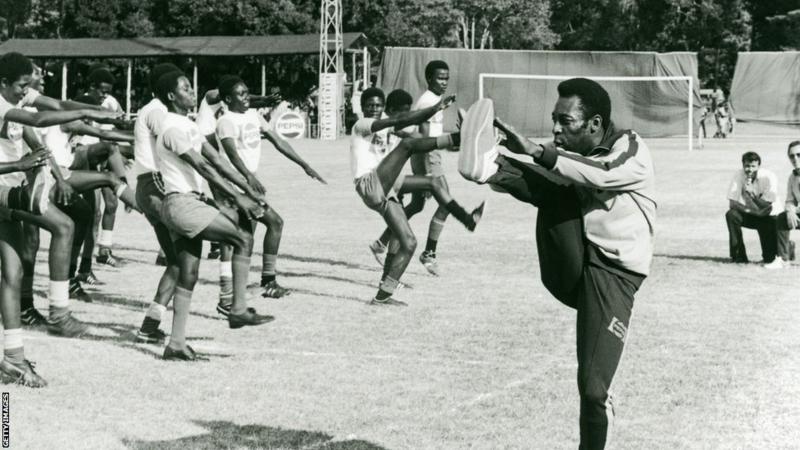
The 1969 visit of Pele to Nigeria changed football in Nigeria


In 1969, with a civil war raging, global football's biggest star arrived in Benin City as part of a visit that would change Nigerian football forever.

Those involved still remember the occasion vividly.

"It was all about Pele. Before one o'clock, Ogbe Stadium was jam-packed and it was difficult for people to have seats, because they were anxious to see the artistry of Pele," Godwin Izilein told BBC Sport Africa.

Izilein had been chosen as captain of a team put together to represent Mid-Western State, an old administrative region that covered what are now Edo and Delta states, in a friendly against Pele's Brazilian club Santos.

"It was at the peak of the civil war. The day of the match, nobody thought of guns any more," Izilein added.
Santasticos on tour

With a roster including Pele and the likes of fellow Brazil legends Carlos Alberto and Pepe, Santos' so-called 'Santasticos' spent much of the 1960s cashing in on their global fame, heading out on exhibition tours across multiple continents.

They made more than one trip to Africa, including the 1969 visit that included stop-offs in Algeria, Congo-Brazzaville, DR Congo, Ghana and Mozambique, in addition to Nigeria.

Aged 28, Pele was already a two-time World Cup winner, having burst on to the scene as a precocious 17-year-old in 1958, scoring six goals as Brazil won their first title in Sweden. The Selecao made it back-to-back World Cups in Chile in 1962, although Pele missed much of that tournament through injury.

Although Santos' arrival in Nigeria came a year ahead of Brazil's much-celebrated third world title, claimed in Mexico in 1970, Pele was still seen as an African sporting icon, given his ancestry on the continent.

"It was quite striking to see Pele in person because we all read about him as a young player who helped Brazil win the World Cup in Sweden," said Jonathan Ofugere, who at the time was president of the West African Football Union (WAFU).

"We were proud that a player of African origin, born in Brazil, could put up such a show."

Mid-Western State governor Samuel Ogbemudia had helped organise the match, having extended an invitation to Santos following their 2-2 draw in Lagos against Nigeria's national team, known back then as the Green Eagles.

"The Nigeria Football Association wanted a guarantee that the Mid-Western government would provide some money to facilitate their movement from Lagos to Benin," Ofugere continued.

"Ogbemudia called an emergency meeting to raise funds. Before long, we were ready to meet all the conditions."
'My first tackle on him was a robust one'

The game took place on 4 February - and started badly for the home side.

"Within five minutes, we conceded two goals," recalls Izilein, who played in midfield.

"I talked to my players and said, 'Look, we have to do something. We cannot be slaughtered here on our ground'."

Izilein's plan involved him taking on the game's most difficult task.

"I had no option but to volunteer to mark Pele.

"He was very skilful and smart, a perfect gentleman. My first tackle on him was a robust one and he didn't like it.''

Izilein's robust tactics seemed to pay dividends. At the start of the second half, a goal for Mid-Western State was greeted by ecstatic celebrations in the stands - and an unusual red card.

"It was wonderful! It was like a million goals. Everybody in the stadium went berserk.

"Esama Igbinedion [a Nigerian business tycoon] entered the pitch and started spraying money on us. He was given a red card (but) didn't leave until after spraying us."

The game ended 2-1 to Santos, but it wasn't the end of Izilein's encounter with Pele.

"(He) was very enthusiastic to hear from me. He said, 'Would you like to follow me to Brazil?' And I said no.

"Nobody was enthusiastic about travelling at that time. If it were now, I would have followed them right from the pitch.''
Nigeria turns to Brazil for inspiration

There are oft-repeated apocryphal tales that claim Pele's arrival in Benin City, close to the frontline of the fighting between Nigerian government forces and Biafran independence fighters, led to an informal ceasefire, with soldiers putting down their weapons in order to focus on the football, although the wider consensus in Nigeria is that this is not true.

If there was a cessation in the war, it certainly didn't last - but the impact of Santos' visit definitely did.

"(Pele's visit) led to a lot of things," said Ogufere.

"The Nigeria Football Association, where I served for more than 10 years, now looked towards Brazil and imitated them and encouraged the players to play like Brazilians.

"That led to Nigerians going to Brazil and Nigeria also hiring a Brazilian coach - Otto Gloria - who helped us win the Africa Cup of Nations for the first time in 1980."

There are also personal stories about the impact the man they called 'The King' had in Nigeria.

"Pele raised the standard of football in Nigeria. He made it very high. The impact was tremendous," says Jossy Donbraye, another of the Mid-Western State team that lined up against the great man in 1969.

"I was just 19 years old. I played as a schemer, distributing passes in midfield," Donbraye added.

"That's why Pele told me that I will play for the country. For me to play 10 years for Nigeria was by Pele telling me."

For Izilein, who would go on to coach Nigeria's women's team, the Super Falcons, the impact on training was key.

''He emphasised discipline. We started training and coaches were being sent out for refresher courses.

"There was no more kick and follow. People now developed the idea of initiating attack from the rear.

"Those who were not interested before... their interest was rekindled."

Pele's death in December at the age of 82 robbed football of an all-time great but Ogufere is convinced the Brazilian's legacy endures in Nigeria.

"We are all very saddened to lose him but he has left an indelible mark which players should look to emulate."

By Joshua Adetunji, BBC

Related story: Video - Nigeria Football Legend Jay Jay Okocha Set For Animated Series Adaptation

25 people killed by Islamist militants in Nigeria

Islamist militants have killed at least 25 people in an attack in a fishing town in Nigeria's Borno state, police and residents said on Thursday.

Police commissioner Abdu Umar linked the attack in Dikwa to Boko Haram insurgents. He said a policeman was killed in a separate incident.

Dikwa is close to the Sambisa forest, a Boko Haram stronghold, which has been fought over by Islamic State West Africa Province, who are also active in the area.

Bulama Modu, a resident who assisted the military in recovery work, said a total of 33 fishermen had been killed. He said 25 bodies were found at the scene of Wednesday's attack while eight others were recovered on Thursday.

Another resident who escaped said the insurgents suspected that fishermen were providing information to the military after the army attacked them some weeks ago. The insurgents extort levies from the fishermen.

The military did not respond to a request for comment.

The Boko Haram insurgency, which erupted in northeast Nigeria in 2009, has killed more than 350,000 people and forced millions to flee their homes.

By Chijioke Ohuocha, Reuters


Presidential election in Nigeria was positive for the region

On March 1, Nigeria’s Independent National Electoral Commission (INEC) declared Bola Tinubu of the governing All Progressives Congress (APC) the winner of the 2023 presidential election.

It said the 70-year-old former Lagos governor won the race with 37 percent of the vote, while his main rival, People’s Democratic Party (PDP) candidate Atiku Abubakar, came second with 29 percent. The Labour Party’s Peter Obi, who had become a surprise favourite in the run-up to the election, came third with 25 percent.

Soon after the results were announced, congratulatory messages started to pour in from across Africa and the world. The chairperson of the African Union Commission, Moussa Faki Mahamat, and the chairman of the Economic Community of West African States (ECOWAS), Guinea-Bissau President Umaro Sissoco Embalo, congratulated President-elect Tinubu on his win. So did the leaders of Ghana, Sierra Leone, Liberia and the Gambia.

The US Department of State, meanwhile, congratulated not only Tinubu but all Nigerians for what it viewed as a “competitive election” that “represents a new period for Nigerian politics and democracy”. UK Foreign Secretary James Cleverly also issued a statement, commending Nigerian voters “for their participation in the Presidential and National Assembly elections and for their patience and resilience in exercising their democratic rights”.

Despite these waves of praise and celebration, however, the election was hardly without problems.

It recorded the lowest turnout since Nigeria’s return to democracy in 1999, with only 27 percent of eligible voters casting ballots. There were widespread allegations of voter suppression and vote buying as well as a few isolated incidents of violence. Most crucially, both Abubakar and Obi disputed the outcome and vowed to challenge it in Nigeria’s highest appeals court.

Nevertheless, despite being far from perfect, Nigeria’s largely peaceful and somewhat efficiently conducted election – which received a stamp of approval from the African Union Election Observation Mission – was a much-welcomed sight in a region long suffering from military coups and strongmen clinging to power.

The head of the ECOWAS Observer Mission to Nigeria, former Sierra Leone President Ernest Koroma, had acknowledged the regional importance of this election days before the polls opened. “Nigeria’s election remains a guide to West Africa,” Koroma said on February 23. “Its failure would spell doom for the sub-region”.

Koromo felt the need to underline the importance of this election because in the days leading up to it, there were growing concerns about the possibility of electoral violence and other likely obstacles to a peaceful transfer of power – and for good reason.

In the last few years, Nigeria has been grappling with severe socio-political and economic challenges, including underfunded public services, police brutality, a stagnant economy, and countrywide insecurity caused by Boko Haram, armed bandits and separatists. Coupled with a long history of military rule, all this raised fears that Nigeria may experience some democratic backsliding in this election cycle.

But despite growing tensions, Nigeria successfully conducted its election and determined its next president without much disturbance. The military stepped in to ensure the security of the polls, but made no move to intervene in the democratic process. Sure, Obi and Abubakar dispute the result, but they appear determined to do so not through violence and populist provocation, but by legal means.


All this stands in striking contrast to the rest of Nigeria’s immediate neighbourhood, where many countries are suffering under military juntas or struggling to hold free and fair elections.

In Sudan, for example, an October 2021 military coup ended the nation’s brief flirtation with democracy, just two years after longtime autocrat Omar al-Bashir’s removal from power through a popular revolt. Since the 2021 putsch, the military has frequently cracked down on pro-democracy demonstrations and it stands accused of abducting, raping, torturing and killing protesters.

Similarly in Chad, civil rights groups have been facing violence and threats since the military took control of the country following President Idriss Deby’s death in April 2021. Led by Deby’s son Mahamat Idriss Deby, the coup leaders suspended the constitution, dissolved the parliament and dismissed the government. On October 2022, the military government postponed the country’s planned return to democratic rule for another two years and said it will continue to remain in control until then.

Burkina Faso is also experiencing extreme political instability. Last year, it underwent two military coups in the space of nine months – one that removed President Roch Kabore in January 2022, and another that deposed military leader President Paul-Henri Damiba in September. The military government now in power says the country will not return to civilian rule until at least 2024.

Mali has also experienced two military coups – one in August 2020 and another in May 2021 – and is supposed to restore civilian rule in 2024.

Meanwhile, Guinea’s first democratically-elected leader Alpha Conde was toppled by soldiers in September 2021, following widespread protests against the veteran politician’s controversial move to “reset” his term limit in a constitutional referendum and seek two more terms.

There were also failed coup attempts in Guinea-Bissau and the Gambia in 2022.

So it wouldn’t be wrong to say Nigeria’s neighbourhood is suffocating under a dark cloud of lawlessness, democratic regression and military interventions.

ECOWAS has attempted to defend democracy in the region, albeit without much success, through ostracising military governments and establishing progressive policies and measures. It has suspended Mali, Burkina Faso and Guinea from the union indefinitely and imposed travel sanctions on senior leaders and government officials from these countries, presumably until civilian leadership and democracy are restored.

Furthermore, it has twice attempted to introduce two-term presidential limits – which are already in place in Nigeria – for its member states, first in 2015 and then in 2021, to counter the growing trend of “third-termism” and advance regional stability. Regrettably, it has failed to secure a unanimous agreement.

In this context, the election in Nigeria was a breath of fresh air. Granted, the polls were not free of sporadic violence, long delays and technical problems. But as the head of the African Union Election Observation Mission, former Kenyan President Uhuru Kenyatta, said in a February 28 statement, the “electoral environment was generally peaceful despite isolated incidents of violence” and “voting and counting took place in an open and transparent atmosphere in the presence of observers, party agents and media”.

Indeed, the political atmosphere before and after the elections has served to confirm the determination shared by most Nigerians to preserve civilian rule and strengthen democracy.

On March 6, for example, Abubakar led hundreds of PDP supporters in a peaceful march to INEC’s offices in Abuja, where he delivered a petition and reiterated his party’s decision to challenge the results of the presidential election. Abubakar’s apparent determination to observe the rule of law as he disputes the election result is confirmation of the confidence Nigeria’s leading opposition parties have in the country’s democratic processes and institutions.

So sure, there was much that was wrong with Nigeria’s election. But despite all the controversies and disputes, Nigeria successfully conducted a democratic election and presented the region with an (albeit imperfect) example to look up to. And for this, it should be applauded.

By Tafi Mhaka, Al Jazeera

Related stories: State elections postponed in Nigeria due to dispute of presidential vote

Video - Opposition candidate Peter Obi says he will prove he won presidential election in Nigeria

Video - Clip from President-elect Bola Tinubu's acceptance speech

Thursday, March 9, 2023

Sharp fall in oil spills in Nigeria after Shell shutdown

Shell on Thursday reported a sharp fall in oil spilled as a result of sabotage in Nigeria's oil-rich Delta in 2022 reflecting closure of operations for six months in the wake of attacks.

The volume of crude oil spilled caused by sabotage in the Delta fell to 600 tonnes from 3,300 tonnes the previous year, Shell said in its annual report.

The number of such spills fell to 75 from 106.

"The decreased number of incidents in 2022 correlates with a shutdown of production for about six months because of an unprecedented increase of crude oil theft from the Trans Niger Pipeline (TNP)," Shell said.

Shell is the operator of Nigeria's main onshore oil and gas joint venture SPDC which has struggled for years with operational incidents, theft and sabotage. 

By Shadia Nasralla, Reuters

Related story: $15m settlement to be paid by Shell for oil spills in Nigeria